I Teach Because I Want to Learn More About Myself

By Marlene Kimble

As a late bloomer in this profession – having stepped into a classroom for the first time at thirty five – I sat with a room full of bright- eyed 22 year olds fresh out of undergrad sitting at the district office eyes glazed over while the HR lady reviewed official documents and we signed on dotted lines.  If you asked any of us why we were there, it would probably be a familiar response: I want to make a difference in the lives of children.  It was true for me too.  I was a mother and wife; I had been home for a number of years; and there didn’t seem to be any job important enough for me to leave my kids so I went back to school to do the job of teaching.

In those earlier years, I’m sure I made a difference in some of the lives of my kids, but I was surprised to find that there was a big difference between being a teacher and actually teaching. That fantasy of smiling in front of the room – cute dress, high heels, calling on kids with hands raised, encouraging them while they did their seat work, grading papers – wasn’t quite what education had in mind in 2005.
Continue reading

Change of Address

By Anonymous

Lots of people change their addresses when looking for a job. People find another address that they can use. I know someone who had better luck looking as soon as she changed her address from North Preston to Dartmouth. She said she felt shame about it, but she had to do it. I changed mine once when I lived in public housing briefly – I used my mom’s address instead, to get a job at a place where that shouldn’t be an issue. Someone else I know, when asked where she grew up, says “the North End” – she doesn’t want to say Gottingen St. If you say “the Square” (Uniacke Square) people kind of say, “Oh, you don’t seem like someone who grew up there,” if you don’t fit the stereotype. But so many people live there.

Reprinted with permission from Working While Black in Nova Scotia.

Working While Black in Nova Scotia is a joint project of Ujamaa, Solidarity Halifax and Kwacha House Cafe. The project aims to publish anonymous stories of anti-black racism in the workplace in Nova Scotia. Publishing these stories allows workers in the Black community to know that they are not alone in their experience of racism.

Racism in the Education System

By Anonymous

Here are some ways racism plays out for people of African descent working in the education system:

– Black teachers can be subtly expected to be the ones to deal with “problem” black students, even if they’re not in their class. This means they have a higher workload since they already have their own students to deal with.

– Black teachers are expected to be the ones to organize events like African heritage Month assemblies, or to lead cultural groups for black students. It’s complicated because often black teachers want to be good role models and help create positive experiences for kids from the black community, but at the same time the expectation is stifling when your workload is heavy. Also it’s great when a black teacher teaches a course like African Canadian Studies, but also that expectation can be stifling. Maybe a black teacher would rather teach another course…

– When there aren’t many black students in a school, there’s a sense of “well, maybe we don’t need to do anything for African Heritage Month.”

Continue reading

Sometimes When We Have Extra Food I Bring It In To Share With My Coworkers

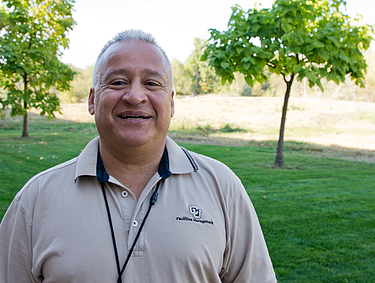
Billy Villa, Custodian

Boulder [Colorado] prides itself on being a diverse, tight-knit community. But many of us who work here feel marginalized and excluded from this experience.

I’m talking about those of us who work for large employers but are making meager wages. I’ve been a custodian at University of Colorado Boulder for about 2 years now, yet I cannot afford to live in the city I work in. I commute at least an hour a day because the rents in Boulder are just too high.

I’m almost sixty and I have to live with my brother and his wife, because I cannot afford to live on my own. Each month, I am just one paycheck away from being broke. That’s why I’ve been looking for a second job to help me pay my bills.People think that working for the state you get a good wage and great benefits, but that’s not true. I’m one of the nearly 3000 state workers who make less than a living wage and struggle to make ends meet.

Continue reading

This Struggle Needs to End

By Laurel Loesser, Custodian

Each day, when cleaning various buildings of CU-Boulder, I see plaques with the Colorado Creed plastered all over campus, the third and final tenet of which says “Contribute to the greater good of this community.” Each day, I feel that the University is far from living the creed, because more than 500 of CU-Boulder’s workers are paid wages we can’t survive on.

When I’m working I try to keep my campus beautiful. I’m on the team that responds to emergencies, so when you have a leak or someone throws up in class, I’m the person who’s coming to fix what’s wrong. I take pride in knowing that I’m making classrooms a good environment for learning and the grounds a beautiful place to walk through. But when I think about whether my daughter could attend this school, I know that as a single mom I can’t afford it.

Continue reading

Good Night

By Tim Fasano, Taxi Driver, Tampa

The night air has a certain quality to it. Over the years I have seen people become intoxicated by it. Everything changes at night. Qualitative and quantitative perceptions change after the midnight hour. Soon, a quite sets over the city; people vanish from their pursuit of the vain and tawdry. A stillness overcomes your perceptions and your observations become keenly aware of activities not seen during daylight. The ubiquitous scrum of traffic no longer dominates the urban sprawl.

As a night driver in the city, you develop a relationship with your surroundings. The delivery man unloading milk behind the supermarket becomes your friend even if we have never spoke. This is where I often sleep while waiting to be summed by the $2.40 a mile idol starring at me from the dashboard. Strangely, he has never been my friend. More like a prison guard, always watching but only capable of doing what its been told to do. Seems appropriate for cab driving becomes a form of incarceration.

All is well tonight untill the guy in the street sweeper truck awakes me up with a sound louder than a jet engine. What gets me is the parking lot looks no cleaner after he’s done. Whatever happened to a broom?

Reprinted with permission from Tampa Taxi Shots.

How I Dealt With Gender Discrimination As A Woman In The Automotive Industry

By Chelsy Ranard

female-mechanic

When I first started working for an off-roading tour in Alaska I didn’t know anything about cars – about any vehicle really. I walked on site for the first time with my manager, who was a man, a few mechanics that were men, and another guide who was (surprise) also a man. I was immediately intimidated…

When I was hired I was told that I didn’t need to be mechanically inclined in any way. Those things could be taught and my ability to show stellar customer service was much more important. Once on site, my manager immediately asked me to drive the karts over to the washing station… I didn’t even know how to start these things. I asked him to show me and he rolled his eyes and showed me how. “Here we go,” I thought. Here comes the gender discrimination. I’m already the only chick on site and (surprise) I’m an idiot.

In the years prior to this I worked for a fly fishing and hiking tour. My boss was a female fly fisherman and we were used to being in an all-male driven industry. I’ve gotten the laughs and snide remarks from men after giving them fishing advice. I have a ton of male friends that I grew up with that give me a hard time for not knowing a particular gun or type of truck. These stereotypes were nothing new to me, but I knew I could learn these things and was always frustrated at these negative opinions from the men in my life. I never cared that they didn’t know anything about my girl-centric hobbies so why should they care about what I didn’t know?

Continue reading

There Are Days When You Eat, And Others When You Don’t, But You Always Have To Work

By Pedro Alvarez

WINDSOR, CA – Pedro Alvarez is a migrant farm worker in Windsor. His children and grandchildren live in northern California. He speaks Triqui, a language spoken by indigenous people in his hometown of Santa Cruz Rio Venado, Oaxaca, Mexico.
Copyright David Bacon

I came here the first time in 1985 and went to work at in a vineyard. I didn’t know how to do the work at first, but I eventually learned how to prune, plant, tie vines and remove leaves. I also worked the grape harvest. I already had experience working outdoors on many ranches and in the fields in Oaxaca. It was easier working back there, though.

After a couple of years I brought my son Alejandro to the U.S. He began to work with us, but then cut his hand. The contractor said, “He can’t work. He has to go to school.” I didn’t know anything about the school system, but a friend helped me enroll him in high school. Alejandro graduated and went on to attend college in Sacramento. Two of my sons later joined me and then I brought my family to the U.S. in 1999. My wife, daughter and grandchildren all came.

I work in the fields to help my family. I worked a few years at one winery and then changed companies. It was very hard working for the second winery because they pressured us to work extremely fast, and they did not even provide us with water. You had to be strong, but some people couldn’t handle the conditions. The soil was hard; to do some jobs you had to walk with a shovel and a sack of fertilizer. People used to faint during the harvest because the work was so difficult. If you were behind the others by 20 plants, there was no work for you the next day.

Continue reading

Twenty Years in the Fields

By Miguel

When I first came I went to Oregon and harvested strawberries, cucumbers and blackberries. It was hard because we were paid by the pound when harvesting strawberries and by the bucket when harvesting cucumbers — not by the hour. I earned about $300 a week. If you didn’t work fast, though, you couldn’t earn that.

When I first came alone, I couldn’t rent an apartment. I lived under a tree with five others. We lived next to a ranch, but they didn’t have any available rooms. It rains a lot in Oregon, and there we were under a tree. The blankets got wet, but we managed to go to work the next day.

After I brought my wife, we rented a room. At first my children stayed back at home in Oaxaca. We only had work for three months each year. It wasn’t a good situation, because there was so little work and hardly any money. With three months work we had to support ourselves, plus our kids back in Oaxaca, for the next nine months that followed. We had to save enough money when we were working to pay the rent when we weren’t. Otherwise, where were we to go? There was enough money for food but nothing more. We wanted to buy other things, but there was no money because we had so little work.

Continue reading

I’ve Worked Many Years in the Fields Here in the United States

By Teresa Mondar

SANTA MARIA, CA – Teresa Mondar is a farm worker from Oaxaca, who began working in the fields of north Mexico when she was eight. Today she is disabled by arthritis and lives in an apartment with her family in a poor neighborhood of Santa Maria, CA.
Copyright David Bacon

I’ve worked many years in the fields here in the United States. Many years. I left Oaxaca when I was four years old. I don’t remember my time there. We moved to Baja California and I began to work there when I was eight years old, picking tomatoes. We came to the United States after that. My memories of that time are very sad because I had to work out of necessity. I started working in the United States at fourteen in California and in Washington State. My mother couldn’t support my younger siblings alone, and I’m the eldest daughter. I couldn’t go to school because my mother had younger children to support.

I started in the fields with strawberries and squash and weeding the fields. My very first job was picking strawberries. The foremen asked how old I was, but I lied about my age because I needed to work. I covered my face while working so they wouldn’t see my true age. We just worked there for the first five years, and then we went to Washington to pick strawberries, cucumbers and blueberries. We’d only go for a short time — two to three months — and then return to California.

Continue reading