Carmen Says

By Carmen Bardeguez-Brown


The Beautiful Faces of My Black People

 Las caras lindas de mi gente negra

Rican Issues

(An excerpt from the poem Rican Issues from the book Dreaming rhythms:

Despertando el Silencio)

That I don’t look What ?

Oh , I guess I don’t look cafe con leche

mancha de platano

Mulata,

high yellow

grifa

By the way

I did not know that there was a puertorican look.

And what exactly is that?

That I just look more what?

Well,    Y    Tu   abuela   donde    Esta?

I should said abuela, tio, Tia, y to el barrio

Let me tell you something

FOR YOUR INFORMATION

Most Ricans are a mix of Africans, Spaniards and Native Americans called Tainos

By the way no one has seen a Taino in the last 500 years.

Sooooo exactly…you know what that means.

We are historical creatures and my story starts with the history of my ancestors, and as such I will start with my parents.

Both of my parents migrated to the United States in the 1950s. My father went to study engineering at Howard University and my mother was sent to live with a lady that somehow my grandfather knew and could help her find work for the Federal Government. According to Mami, it was her way of forgetting a love affair gone sour.

My parents had a serendipity encounter in a public bus in Washington, DC. She was on her way to work and my father entered the bus wearing his military uniform with a few of the soldiers from his division. One of the men in the group made a comment about how beautiful my mom was and she responded in Spanish. They were all surprised at the novelty of finding a Puerto Rican who spoke Spanish in a public bus in DC. They talked and exchanged numbers and on the next day, my father went to her place with flowers. Like they say, the rest is history.

My parents said they both liked the US capital. Upon graduation, my father served as Captain in the United States army. I believe that he served one or two duties in the Korean war. After a romantic courtship, he and my mom got married in a civil ceremony in New York and celebrated the event with a few relatives that were living in the Bronx.

Essay: What are the Colors of Colonialism, Puerto Rico?

They both had serious experiences of discrimination while living in the United States. At the time when they were in DC, members of the Puerto Rican Nationalist Party, namely, Lolita Lebron, Andres Figueroa Cordero, Irving Flores Rodriguez, and Rafael Cancel Miranda entered the gallery of the US House of Representatives and open fired after the session on March 1, 1954. Five congressmen were seriously injured in the act which was a political act to call attention to the abuses and injustices perpetrated to the people of Puerto Rico.

Mami said that before the shooting inside the halls of Congress happened, she was reminded constantly that she was a “different kind of black, but she was black.” But after the attack, she experienced rejection for being Puerto Rican. Speaking Spanish became a serious threat to the Americans that she dealt with on a daily basis.

Dad only shared with me and my older sister one of his many experiences on discrimination. He said that one of his early experiences occurred after an arduous military training. He went out to eat with two of his friends at a local diner. He said that they were starving. They were all wearing their uniforms. As they entered the diner, they sat down and the waitress showed them the sign that said that they did not serve color people.

Dad said that they all felt humiliated and disrespected. He could not believe that they did not even honor that they were soldiers. I could still remember his restrained anger as he related the story to us.

In spite of the discrimination that they both experienced, my parents considered settling in DC as my father received several job offers after his graduation. The salary of the job offers was high and he knew that he will never earn that kind of money in Puerto Rico.

But they eventually moved back to Puerto Rico in 1955. My dad told us that he refused to raise his family in a country that legalized racism and discriminated against black people.

So my parents, then newlyweds, embarked on a new life back in Puerto Rico. They will have three beautiful girls. My older sister Arlene, who will later become a medical doctor and medical professor at Rutgers University, then me, a long-life poet and educator who dabble in social and political activism, and my young sister Debbie who studied agriculture in Mayaguez and worked for the USDA.

I know my family had a unique experience as black Puerto Ricans. It was a constant reminder when we participated in social events sponsored by the coveted Sociedad de Ingenieros de Puerto Rico. There were only two black families that participated in those events: the Walters and us, the Bardeguezes.

In Puerto Rico, everyone is mixed. You could “look” white but your father or mother or brother or sister or grandmother or grandfather is black. We come in the black-brown-white spectrum. The problem is that hardly anyone or a very small percentage of the population and the mainstream culture in general refuses to acknowledge their African heritage and accept themselves as a black or mestizo culture. As with many countries that were part of the African diaspora experience, we had institutional slavery until it was abolished in 1873.

Yes, my friends, there was slavery in Puerto Rico, Dominican Republic, and Cuba.

That indian/trigueno look is more a consequence of the black mestizaje than Taino mestizaje. Remember that the Tainos were killed 50 years after the Spanish invasion while the Africans have been living in the island for over 400 years.

The Tainos no longer existed. They were massacred by the Spaniards. Many Puerto Ricans have difficulty accepting this reality and prefer to dwell in the myth of a modern Taino nation.

We all have Taino ancestry in our DNA and our culture, but ours is historically a culture that is predominantly of  African descent.

I believe that our failure to accept this fact is part of the vestiges of slavery and a problem that affects our cultural understanding of who we are as people. This lack of self-knowledge influences how we understand political and cultural struggles that have the potential to support radical change in our communities.

Like the famous Puerto Rican saying goes: “Y tu abuela donde esta?”

Higher Education is still a problem of class and race. There are not too many “Black Puerto Ricans with professional degrees.”

The Black Puerto Rican experience has yet to be written and understood. My intention is not to document the history of all Black Puerto Ricans. Iam just going to share one my story.

I love my country but my appreciation and love for my black heritage was born from a combination of looking up to the African American experience and the love my parents instill in us of the many accomplished Black Puerto Ricans.

Afro-Boricuas like Ramon Emeterio Betances, Pedro Albizu Campos, Francisco Oller, Sylvia Del Villar, Juan Morel Campos, Rafael Hernandez, Ruth Hernandez, Arturo Schomburg, Jose Campeche, Juan Boria, Dr. Jose Ferrer Canales, Rafael Cepeda, Pedro Flores, Rafael Cortijo, Ismael Rivera, Rafael Cordero, Roberto Clemente. I remembered how people mentioned their names and celebrated their contributions to the Puerto Rican culture.

There is a different kind of racism in the United States and in Puerto Rico.  The most important fact is that we did not have to legalize racism like Segregation or “Jim Crow” and rampant decades of lynching. There was no KKK and rampant police brutality that was race-based.

In Puerto Rico, cultural discrimination is ingrained in the language that undermined any acceptance of blackness as beautiful. For example, this thought is revealed by a few of the common sayings or “dichos” such as:

Casate con una blanquita para mejorar la raza.

Ay pero que linda en su tipo.

Ay es negrito pero con facciones finas.

Ay nena esa nariz Africana.

The media perpetuates the misconception of the “Puerto Rican look.” There was once a commercial sanctioned by the Tourism department of Puerto Rico that had 3 light skinned Puerto Rican kids with blond hair and blue eyes wearing a Vejigante mask from Loiza. Everyone knows that Loiza is one of the most African-centered Puerto Rican towns in the island.

My parents were proud Ricans who knew and embraced their culture but they also experienced the Puerto Rican brand of racism which was very different from the one they experienced in the United States. They also loved and embraced the history and culture of the African Americans. They blended the best of both worlds and as such, raised us to be conscious of our place in Puerto Rico and prepared us for what will be our future reality of Black Puerto Ricans who migrated to the United States.

A few days before my father passed away, I shared my desire and plans to go and live in New York and crashed with my sister that was doing her medical residency in Queens. I will never forget his words. “Acuerdate, Carmin que tienes que ser mejor que ellos para que puedas echar para lante. Sea aqui o alla.” Wise words from my beloved father.

Essay: What are the Colors of Colonialism, Puerto Rico?(About the author: Carmen Bardequez-Brown is a poet and teacher living in Hartsdale. Born and raised in Puerto Rico and educated in the US and Puerto Rico , she tackles the complexity and nuances of being a creature in both cultures of the East and West, the colonized and the colonizer, in her blog. The birth of this blog is brought about by Carmen’s desire to write and publish which is ushered in by the Aspiring Writers Mentoring Program of 2018. This is her second issue.) 

Teacher-Poet Offers Love Letter to Puerto Rico

carmenPR

CARMEN SAYS

By Carmen Bardeguez-Brown

Iam

Iam a woman.

Iam Puerto Rican.

Iam Nuyorican.

Iam an immigrant.

Iam African descendant.

Iam Taino descendant.

Iam Spaniard descendant.

Iam an American citizen.

Iam an ancient soul traveling this life’s journey.


This blog is an opportunity to share my love and concern for my adoptive country and my fascination with my step-culture. I want to understand who “Iam” through the complex relationship that I have of being a Black Puerto Rican/Nuyorican living in New York.

I hope that you journey with me, as I share my view on issues that affect our communities. When I say our communities, I refer to the immigrant Latinos who live in New York. I welcome your feedback and hope that together, we can make sense of who we are as individuals and as communities that need to galvanize and help create a society that supports human potential.

We all have stories that unite us and struggles that may divide us. Let us create conversations that build bridges of understanding, one word at a time. Conversando.

Conversation is key to our understanding.  Por que, hablando se entiende la gente.


Iam


I was born and raised in the beautiful island of Puerto Rico. I never experienced the change of season as we only have one: summer all year long, and of course – the hurricane period from June to November.

Poet-Teacher Tackles Puerto Rican Life and Culture in a Blog

The warm weather is always ameliorated by the occasional chubasco which is a short period of heavy rain during the middle of the day. Big warm droplets of water make the hot sun less harsh.

I always see mountains from every point on the island. The lush and colorful vegetation of our tropical paradise is part of everyone’s daily life. The breeze of the ocean kisses our skin from north to south, east to west.

The island is divided horizontally by the Cordillera Central which is a system of mountains whose highest peak is Cerro de Punta at 4,390 feet. This region of Puerto Rico is famous for the coffee plantations which have been the second most important export from the island.

Poet-Teacher Tackles Puerto Rican Life and Culture in a Blog

The coast of the island used to have the sugar plantations which used the African slaves and later on, of the jornaleros. Sugar cane was the most important commodity under the Spanish and early American colonialism.

In the evenings, nature treats us to a relaxing musical concert by the coquis. These are small indigenous green frogs that only exist in Puerto Rico. They create the most beautiful symphony that soothes us at the end of the day.


The wrath of Irma and Maria


After Irma and Maria, the coquis’ melodic sounds had competed against the growling of electric generators, a sound that reminded everyone about the harsh “new normal” of daily life of living in Puerto Rico.

Poet-Teacher Tackles Puerto Rican Life and Culture in a Blog

A seating president throwing paper towels to people struggling to rebuild their lives after one of the worst natural and man-made disasters in 100 years was a good reminder of the humiliating treatment Puerto Ricans had always received from the United States since its invasion in 1898.

The tragedy of the natural disaster of Maria was as ferocious as the financial hurricane that 100 years of colonial and self-inflicted corruption afflicted the country. A perfect storm had always been steadily created in the cauldron of modern capitalism with the United States government and its corporations using our land as its “bitch” without respect for the environment.

Academic studies show that almost every single river in Puerto Rico is now highly toxic and contaminated by all of the debris of the pharmaceutical companies that are located on the island, while the profits fly away to the mainland

Quieting of our Struggles

The nice manners and calm demeanor of many Puerto Ricans, to me, are a quiet way of carrying our history of massacres and constant surveillance of anyone who attempt to question or challenge the colonial system.

We have martyrs who gave up their lives trying to create a better life for the Puerto Rican people, but they are not celebrated like the US celebrates its founding fathers. We whisper the names of Albizu Campos and Ramon Emeterio Betances.

The continuous struggle for the country’s right to be independent is considered a marginalized note of a small group of people who don’t deserve to have their names remembered in history books.

A tropical island that imports most of its food is seriously a disgrace. As it is, the Jones Act of 1917 that establishes Puerto Rico as a “modern colonial model” by granting the Puerto Ricans American citizenship while eliminating any commercial venture of the island with any country that is not the United States.

So this Caribbean paradise, “La isla del encanto,” has been engulfed in a complex relationship with two of the most powerful empires of  the last 500 years, Spain and the US. The history of Puerto Rico has always been an afterthought or a just comment of the ancestry of celebrity singers.

Our Indigenous Narrative

Boriken, which is the original name of the island, was inhabited by natives called Tainos. Like the rest of the native population of the Caribbean, they were killed. They became extinct by the genocidal conquest of the Conquistadores led by Spain and other European countries.

Our country was “discovered” by Columbus in 1492. The Taino population was obliterated in less than 50 years. The Spanish empire brought West Africans to work in the plantations as part of the African Slave Trade. Like many countries in the Americas, the population in Puerto Rico became an amalgamation of diverse west African cultures, Tainos and Spaniards. The issue of controlled migration patterns is certainly an important topic that I would like to discuss in another article.

Puerto Rico was a colony of the Spanish empire from 1492 to 1898. The country was sold alongside the Philippines to the United States as a victory claimed of the Spanish-American-Cuban war.

The Puerto Rican people are unique. It is not an opinion, it is a fact.

We have been involved in the process of creating a national identity amidst the oppression of colonial occupation since 1492. Our character, history, and culture are a complex blend that illustrates individual and character development in spite of systemic efforts to destroy and suppress our growth and development as individuals as well as flourishing of our collective soul.

Poet-Teacher Tackles Puerto Rican Life and Culture in a Blog

We were born from the lasting cry and struggle of our first inhabitants, the Tainos. They succumbed to the tyranny of a greed inspired genocidal conquest but their DNA is in our heart, blood and soul.

We were born from the creative spirit, sweat and struggle of the Africans who were kidnapped and enslaved for over 300 hundred years. We were born from the sweat of the Machetes of the jornaleros that cut the sweet sugar cane in the plantations. We were born from our desire to exist and thrive as a creative group of Caribbean people destined to be free.

I don’t pretend to explain or dictate what I think is the history of Puerto Rico. I just want to stress that it is essential to understand that historical conditions of one’s life influence who we are. As a  Puerto Rican of African descent who was born and raised in Puerto Rico and migrated to the United States in the 1980s, my life choices are better understood if I know the historical factors that contribute to the reality that continues to influence my life.

Poet-Teacher Tackles Puerto Rican Life and Culture in a Blog

In order to understand who I am, I need to know the context of the history of my family and the history of my country and my culture. Only if I know the cultural and historical factors that contribute to shape and influenced my life can I have a better understanding of myself.

Only by knowing who “Iam” can I relate to the experiences that other people have. We all live in a small blue dot planet called Earth and it is only possible to coexist in a mindful way if we embrace our uniqueness in the majestic tapestry of similarities and differences that enrich our earthly life’s journey.

(About the author: Carmen Bardequez-Brown is a poet and teacher based in Hartsdale. Born and raised in Puerto Rico and educated in the US, she tackles the complexity and nuances of being a creature in both cultures of the East and West, the colonized and the colonizer, in her blog. The birth of this blog is brought about by Carmen’s desire to write and publish which is ushered in by the Aspiring Writers Mentoring Program of 2018.) 


We Built New York: Honoring Chinese Workers

chineseworkers-1024x575Between the 1970s and the 1980s, a wave of Chinese workers immigrated to the United States, in hopes of building a better life for themselves and their children. The hardships they faced were challenging and unexpected. Using photographs and first person stories, We Built New York: Honoring Chinese Workers showcases Chinese Americans in New York City, many of whom worked in factories in the garment industry. Their contributions are essential to the fabric of New York and the country as a whole. This month, which is Asian Pacific American Heritage Month, we’re highlighting their immigrant experiences.

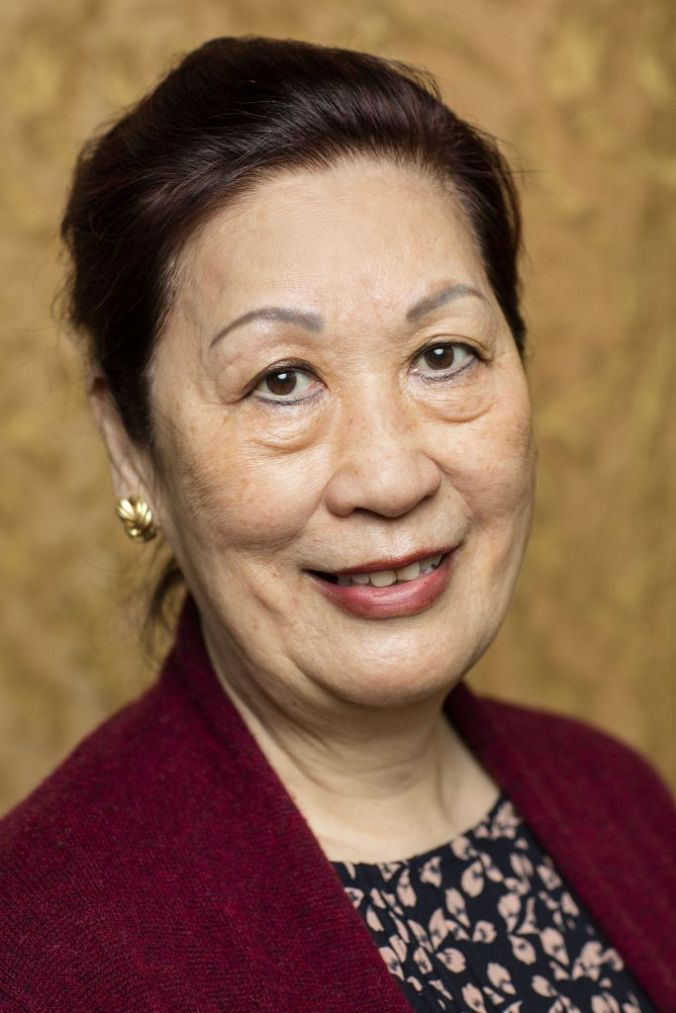
We Built New York is a project of LaborArts, The National Writers Union, Workforce Development Institute, and Remember the Triangle Fire Coalition. Photographs by Matthew Septimus. For more information, visit: National Writers United Service Organization

An interactive presentation of this material by PBS’ Chasing the Dream series can be found here 

ctd-notagline

Agnes Wong

Agnes-Wong-2

Agnes Wong was an activist in the International Ladies’ Garment Workers Union for more than 30 years. Born in Guangzhou, China, she moved to Hong Kong as a child and came to New York with her husband in 1974. Shortly after arriving, she took a job working as a seamstress in a garment factory in Chinatown and joined Local 23–25 ILGWU. She walked out of her factory with 20,000 of her co-workers in the 1982 Chinatown Garment Factory Strike, and later became a shop representative and a Local 23-25 Executive Board member.

She credits the union with ‘bringing her up’—she met strong women leaders, and learned English, leadership development, and organizing. The union, in return, benefited from Agnes’ activism. Over the years, she helped organize Chinese speaking workers in various industries in the US and in Canada. Completely bi-lingual, she represented the union in the media and by lobbying government officials on human and workers’ rights, fighting against free trade agreements and sweatshops in the garment industry, and by educating the public about the Triangle factory fire and its legacy. Wong is currently Vice President of the Local 23-25 Chinese Retirees Club, which engages its 500 members in political, educational and recreational activities.

A founding member of the Chinese Committee of the Coalition of Labor Union Women and the Asian Pacific American Labor Alliance, Agnes is active in many communities. As a committed member of the Transfiguration Catholic Church she provides support to those who feel isolated, regularly visiting the sick and ailing. “As an immigrant to the US who knows no one,” she explains, “you feel distressed. That is why it’s so important to support each other.”

Alice Ip

Alice-Ip-683x1024


(as told to Ruth Sergel)

“Everybody came here with a dream”

Alice grew up in Hong Kong with six brothers and sisters. Her father had one of the first cars in Hong Kong. He repaired cars and gave driving lessons. Education was subsidized through elementary school. After that, one had to pay. There were a lot of people in Alice’s home. Not just immediate family but also a cousin, her grandmother and an adopted daughter from the village. It was a heavy responsibility for her father.

We asked Alice how she met her husband. “I was not so lucky. I was only 18. My oldest sister was teaching in a school. My aunt thought my sister is good and wants to introduce her to a boy but my sister already had a boyfriend in high school. My aunt brought 5 oranges. She says the man is a sailor but he wants to marry and settle down. It turned out that he just wanted someone to care for his elderly mother while he was away.” Alice got married in 1967 and gave birth to her first daughter in 1968.

Later Alice’s sister felt so sorry. She said to Alice “You are good, I shouldn’t have refused him.” Her sister felt guilty her whole life because the man wanted someone who would be successful outside the country but Alice was very quiet at only 18 years old.

We ask Alice, but he loved you? Alice says no, no he just wanted someone to care for his mother. In 1970 Alice moved to Holland with her two year old daughter because her husband had left when she just had the baby. She was 18 years old and already had one child. She was alone when she gave birth to her second child and went on to have three children. Her husband was a gambler and always getting fired. But Alice still took care of her mother-in-law for the next 20 years.

Alice’s father-in-law didn’t have a green card so he couldn’t help to get them to the US but later Alice’s sister married an American citizen who took her to America. She became an American citizen and brought Alice over from Holland. Alice says that all immigrants think coming to America is the best. People see coming to America as the Golden Mountain, you will make a lot of money. When Alice divorced from her husband her co-workers opened a bottle of champagne to celebrate!

“The union saved my life”

In 1982 Local 23-25 needed more staff to help organize the strike and Alice was hired. She was so accomplished at her job that she became a business agent overseeing 72 shops and a member of CLUW.

Alice had learned from her father to be happy working with a group of people. She didn’t get a higher education, didn’t even get through high school. Bravery and confidence came from her father. He only went to school for two years but he can communicate. He writes good English and Chinese. This influenced the moment Alice gave her famous speech at the Uprising of 1982.

May Chen remembers Alice’s speech. The bosses said “but you’re Chinese, you should have life like in China” but Alice said “No, we are in NYC we should be treated like New Yorkers!”

Alice tells us, we are all blessed from our parents. Education is important and sharing love, being brave, being positive We learn from others. It is important to respect others.

“How do we create change? We need to organize!”

Alice believes that love can convince people to change their way of thinking. You have to be reasonable when you talk to people and try to make them happy. People need to understand that you can’t make yourself happy based on the sorrow of others. Alice found that she was happy to help people.

Alice shared her work method with us: in order to solve a problem – you need to get information. You have to be smart about things. Some people are bad, they even steal. You have to take the time to really know who they are, then figure out what to do.

Alice shared the story of an older man who went to China and came back with a young bride. They had two children. The young woman worked in the garment industry while the man stayed home with the children. One day he stepped out briefly to pick up some food. When he came back, the apartment was in flames from a faulty heater. He tried to save the children but they both died and he was blinded in one eye.

The mother was inconsolable. No one knew what to do anymore to help her. She had lost the will to live. Alice thought about the situation. Finally, she reached out to the woman and told her this: Yes, you are a mother, but you are also a daughter. Alice contacted the woman’s mother and brother back in Honk Kong. She kept reminding the woman of her place in the generations of life. Slowly, with Alice’s thoughtful care, the woman came back to life. She and her husband  found the will to have a family again and went on to have two beautiful children.

For Alice, no matter what happens in life, you have to stick to your values. “I want to give the message to the younger generations. If people don’t agree with you, you can’t do anything. You cannot do great things by yourself. You need a group of people.”


May Ying Chen


May-Ying-Chen.jpg

My name is May Ying Chen, and I was born in Boston, Massachusetts – the first of my family to be born in America. That’s why my grandfather gave me the name May which is the same Chinese word for America. My parents were immigrants from China and Hong Kong, and they gave me values of education, food and family, humility and self-respect. I had a lot of typical “girl” jobs in my life, including babysitting, sales clerk in big and small stores, office work in a big library, small college office, and a Chinese tea company. I studied to be a teacher, but when my family moved to New York in 1980, public schools were facing the city’s economic crisis and cutbacks, so there were no teaching jobs.

I went to high school and college in the turbulent 1960’s, when we believed that everything in life is political. I was lucky that most of my jobs related to something I believed in…jobs and work were tied together… Even though job recruiters back then were allowed to designate certain jobs “for men only,” women were fighting for more equal treatment at work, and I supported a lot of these demands for Women’s rights. I was proud and happy to be in the workforce getting my own paychecks, and it actually felt funny (in a good way) to retire after working continuously for 40 years, and to get paid (pension checks) without having to work! More than forty years ago, I was lucky to meet and marry Rocky Chin through volunteer work in the Asian American community. He is a solid partner and soul-mate in raising two children, and now babysitting four grand-children, while staying active with community, friends, and family.

I worked in the garment workers’ union for 25 years, my longest and best job. There were many challenges: sad hardships faced by the immigrant workers, job losses as the garment industry went global, anti-union bosses and governmental policies, the tragic impacts of 9-11. The people were wonderful, and there really was a deep sense of family and solidarity and team work in the union that kept us going. I got my union job after a huge strike of the Chinatown garment workers in New York City in 1982. I was working for the hotel and restaurant union and was called to support two massive rallies in Columbus Park. It was amazing to see close to 20,000 Chinatown workers cheering for union speeches and marching down Mort Street on strike! Almost every family in Chinatown had garment workers, or employers. This was such a big industry for decades, until the millennium, and 9-11.

Local 23-25 did a lot for the workers and community. Our families had good health care benefits. There was a small day care center. Workers and union were active in politics, registered to vote, and lobbying in New York City, Albany, and Washington, DC, for good jobs, fair treatment for immigrants, women, and all workers.

What matters most to me then and now is to make a better world for family, friends, immigrants, and workers. I am very grateful for the jobs, adventures and experiences I’ve had. I hope young people can open their minds and hearts to other people, find good friends, mentors, and partners in life, and enjoy a bright future.

Bonny Ng Mui Leung & Cindi Sai Leung


WBNYCrop2.jpgWe were born in Vietnam. Our family was from China, but our parents had businesses in Vietnam. We were a very big family of ten children; six girls and four boys. Our mother took us back to China to be raised by our Grandma. After she died, an elder sister took care of us. After a few years in Guangdong, we moved to Hong Kong…3 sisters and an older brother. Bonny (Ng Mui) was about 12-13 years old. Our parents were still in Vietnam, and Mother only came back once a year. She brought gifts and special foods. We were very obedient, took care of ourselves at home, and did a lot of different handicrafts work… embroidery, knitting, making wigs. We didn’t run around outside. Later, Bonny worked for a tailor and did trimming and belts, often taking work to do at home. Cindy worked at making wigs.

After the Vietnam War ended in 1975, our parents were able to immigrate to America, and we followed in 1976. When we got to America, we were glad to find jobs in the sewing factories. We had to learn how to sew, how to use the machines. The co-workers were very friendly about teaching us, and telling us how to join the union. Factory work was good for us, Since we did not know English. Cindy worked in six different factories, starting with ladies’ suits, then coats and evening dresses. Everyone helped each other to get and share information at work. Bonny worked at three different places over twenty-nine years, making pants, skirts and vests. There were health benefits, paid holidays, and the union offered many activities. We took English classes and joined the union’s chorus. We also supported lots of marches and rallies for the garment industry. The boss let us leave work a little early for union meetings.

Bonny did volunteer work for NY Downtown Hospital helping people in Chinatown with health check-ups, mammograms, etc. We also used our old handicraft skills to make quilts and banners for the community and union. Cindy got a part-time job making men’s wigs for a short time. The men’s wigs were different from the Women’s wigs she did in Hong Kong… they were toupees that stick to the head. Eventually the wig business moved, so her job ended.

Children need to be taught to help each other and respect their elders. Parents and children need to learn patience. We know co-workers who were punished with jail time for beating their kids. It’s better to talk about problems and resolve them. There was one parent who took his child to a strange place and left them there alone to find help and get home. Later, this kid grew up to become a police officer!

Betty Fung

Betty-Fung

I was born in 1939 in Enping, Guangdong, China. During the Sino Japanese war, my family moved west to Guangxi, and my little brother was born there. When the war ended, the family moved back home to Guangdong.

When I was 18, my family married me off to a man known for his bad temperament and mean personality. He was a ship worker working for months at sea, so I went to live with his mother. My mother-in-law was so kind to me–she encouraged me to finish high school. I lived at school, and she cooked and delivered food to me. Later she arranged for me to move to Hong Kong, to escape the hard life in the village.

This was the 1950’s and 1960’s. My father went to the Dominican Republic and opened three photo stores. He needed help, so my whole family went there, including my husband and me. Our first son was born there.

By 1978 there was a lot of political unrest in the Dominican Republic, and the US was welcoming refugees. We missed the first deadlines, but finally succeeded in coming to the US. The first ten years were very hard for me and the family. I worked in the sewing factory and took work home. My sons helped with the factory work I took home at night, and they got summer jobs in restaurants to help support the family.

My husband’s bad habits were a drag on the family. He gambled away his money and could not hold a steady job. Nobody would hire him. He had a terrible temper. One day he smashed a glass vase when he threw it at me. Luckily, I was not hurt, but I locked myself in the bedroom and told him I would call the police and have him arrested. After a long, long time, I came out. The glass was all cleaned up. He asked me what I was doing for such a long time. I told him I spoke to the police and would make sure he went to jail if he ever did that again. (Actually, I never called the police!) He really changed after that, and I wondered why I waited so long to threaten him! My in-laws were always so good to me, so I would never leave my husband.

I taught my sons to study hard for a bright future, to love their parents, and to help with the housework. They would get good jobs and become good husbands when they grew up!

Biao Chen


Biyao-Chen.jpgI was born in Taishan, Guangdong, China in 1939. My grandfather and ancestors went back and forth from China to the US, so our family had five generations in America…
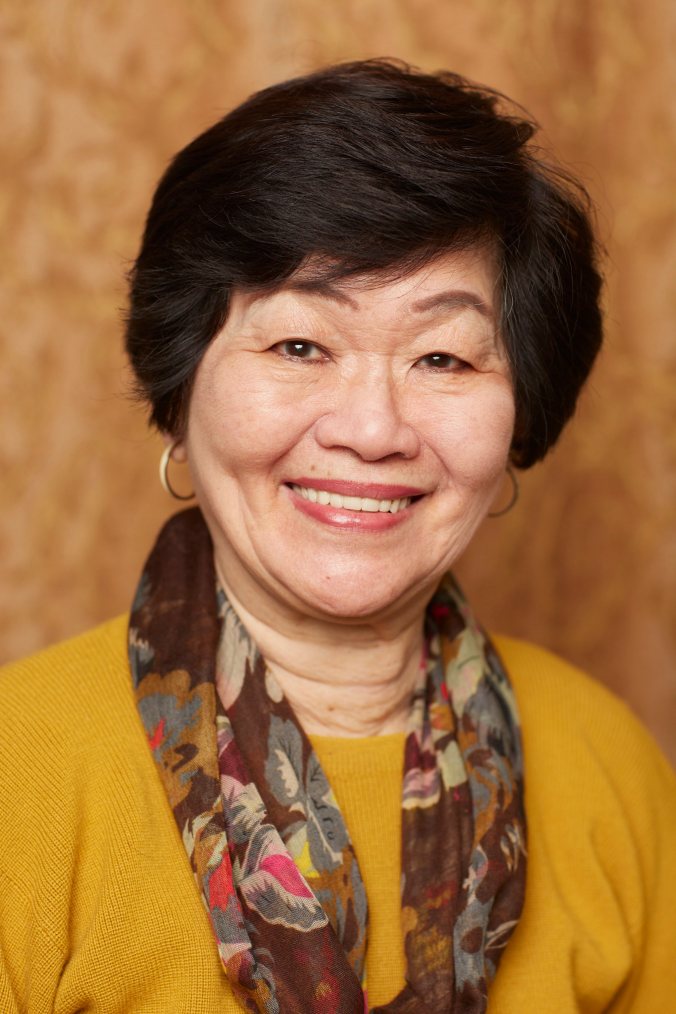
My father worked in Guangzhou, managing a factory that made hospital equipment. Mother stayed home in the village working in the fields. She died when I was only three years old. I had a little brother, but there was not enough to eat, and he was only one year old when our mother died. He died when he was three. My father re-married, and my stepmother had five children. I took care of my baby sister and helped a lot around the house.

My grandparents encouraged me to go to school, and my family supported me. When I was 15 years old, I needed $100 to finish my studies. My grandmother said she had no money, but my aunt said there was $100 put aside for my wedding. I didn’t want the money for my wedding, but I needed it for school. They gave me the money, but told me not expect any wedding gifts from them later!

I finished 12 years of school and became a teacher. I met and married my husband who was also a teacher. Although life in China was poor, we had stable jobs. We saved money whenever we could: we lived and ate our meals at school, and got around by walking everywhere. We had three children.

One of my students became a famous painter and won a prize in a national contest. I’ll never forget the special dinner they had, and it was such an honor to be there.

My favorite color is red. It is a strong color that shows determination, that you can stand up for yourself, even to bullies. That’s especially important for women!

I stayed in China until 1990 when Deng Xiaoping opened China’s economy and society, and I could immigrate to the US.

In the United States, I always had jobs in the sewing factories. I could make clothes for my kids. The whole purpose of coming to America was to give them new opportunities. I am not afraid of hardships, and was willing to do all the jobs in the factory… repairs, working at different machines, and all the sections of making the whole garment.

My longest job lasted for ten years, working in a sportswear factory in Manhattan’s Chinatown. I tried working in the Brooklyn factories closer to where I live, but the pay was not as good as Manhattan. I also was offered a community teaching job in Brooklyn but there were no benefits. I liked to sew, and the union benefits and activities were important to me. I took English classes, became an American citizen, and I vote in every election. I helped the union make phone calls to remind other workers to vote. I became very active in the Union’s Workers Center in Sunset Park, Brooklyn. I met lifelong friends. They helped me so much after my husband died. We really care about each other and share everything together.

What matters most to me is good health. I want to be able to keep doing things for myself, to keep active.

My messages to young people are: learn and listen to your teachers, learn both English and Chinese, and take care of your health. Discrimination is a big challenge, and you need to learn how to speak up, to complain and to fight discrimination.

Connie Ling


Connie-Ling.jpgMy name is Connie Ling, and I came from a Chinese family living in the Philippines. My father was very strict-all of the kids had to work hard in the family store after school. The store was in a very poor community in the Southern Philippines. The customers were sometimes very tough or rude. I learned to understand these problems, but also to protect the store. My mother came from a very large, poor family with ten children, always struggling to survive. She taught me to love my neighbors, because the neighbors always helped each other out.

When I was a teenager, my father sold the store and moved the whole family to Hong Kong. I had to learn to speak Chinese. After a few years, it was time for the family to find me a husband. The family would find young men to meet me. I was very picky. I did not grow up in Hong Kong or China speaking Chinese, so I was  not the traditional Chinese girl. I wanted to find a husband who spoke English. I went through 18 young men before I finally agreed to marry George Ling, who was born in the US, raised in China, and spoke English!

Life changed a lot for me when I came to New York, to America! Like a lot of other immigrant women, I got a job in a Chinatown sewing factory, very close to where we lived. It was hard work, since I did not have experience with the sewing machine before. I worked in the factories for 10-12 years, both non-union and union shops. Since I spoke English and Chinese, I helped my co-workers ask questions and get information from the union rep who visited the factory. I was never afraid to speak up…I had a “big mouth”!

I always liked to help people.  One day the union rep asked if I would like to work for the union.  I met the union’s President (Jay Mazur) for a job interview. He told me that the work involved more than helping people. There would be struggles and protests to organize the non-union factories and fight for the workers’ rights. I thought it over and discussed it with my family, and finally took a job with Local 23-25 in 1982, just before the big Chinatown strike. Working in the factory and in the union, I saw lots of problems faced by the workers, like unfair pay or getting fired for no reason. When workers had complaints, some bosses got very angry and yelled at me to get out of the shop. When I came back with more union co-workers, we convinced the boss to resolve the workers’ problems step by step. I worked in the union for twenty years, and retired in 2002. The most important result was a close relationship with hundreds (thousands?) of workers in the community who still keep in touch today.

I had three children in the years I worked in the factory. I was active in the parent association of the middle school that my kids attended, for five or six years. As Parent Association President, I helped to raise money for the school, sponsor parties to thank all the teachers, and organize parents to go to hearings and rallies at the school board and City to support our kids. My children are grown up and married now, and I have three beautiful grandchildren. Family and community are very important to me, as well as all the old friends from the union days and new friends in retirement. My late husband’s Chinatown village association picked me to organize a Women’s Committee because they valued my union organizing experience. I am also active in Church activities, Bible study, and home visits to seniors. I love to travel, and I love to learn.

My message to the young generation today: life is full of ups and downs. Keep moving forward, look to the future, don’t give up your dreams!