Michael Zweig, Economist, Activist

unknown

By Jenna Lofaro

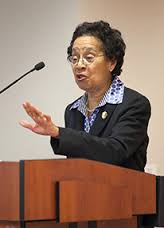
Michael Zweig is an accomplished economist, professor, and author. He has worked as a professor at SUNY at Stony Brook and been awarded the Chancellor’s Award for Excellence in teaching as well as the President’s Award for excellence in teaching.  He also sees himself as an activist in social causes.

When asked how he charted his life, he said that as a young adult he was very much like every other confused college student, unsure of direction.  His family always had maintained a large involvement in his life, and he remembers taking a lot of science and math courses because his father had been an engineer and his brother a mathematician. The concepts of math found in certain parts of economics were always there in the background.

While attending college, Michael also found himself involved in the Civil Rights Movement, which had just started to take off. Later, he found himself involved in many more social movements throughout the decades, including the anti-war movements over Vietnam.

He was and still is very passionate about social movements. Social movements are one of the main influences on history in today’s world, he said.

He even asked me why I thought social movements were so important in the nation’s history and how they had come about. He smiled and nodded in agreement to my answer that social movements build when groups of people feel they have not been heard and that their issues in society have not been acknowledged. So they band together and make themselves heard so that the problem no longer can be ignored.

Along with his involvement in social movements, Zweig is also very active union worker. Unions are very important to seeking and achieving goals for the group they present. Continue reading
Debbie Quinones, Coquito mixer

debbiequinones

By Lisbeth Brosnan

Coquito is a coconut-based alcoholic beverage traditionally served in Puerto Rico. A Coquito recipe is unique to the family that makes it. On November 13, 2016, The Bronx Museum for the Arts hosted winners and finalists of the Annual Coquito Masters competition. This event allowed the finalists to sell their delicious coquitos at the museum.

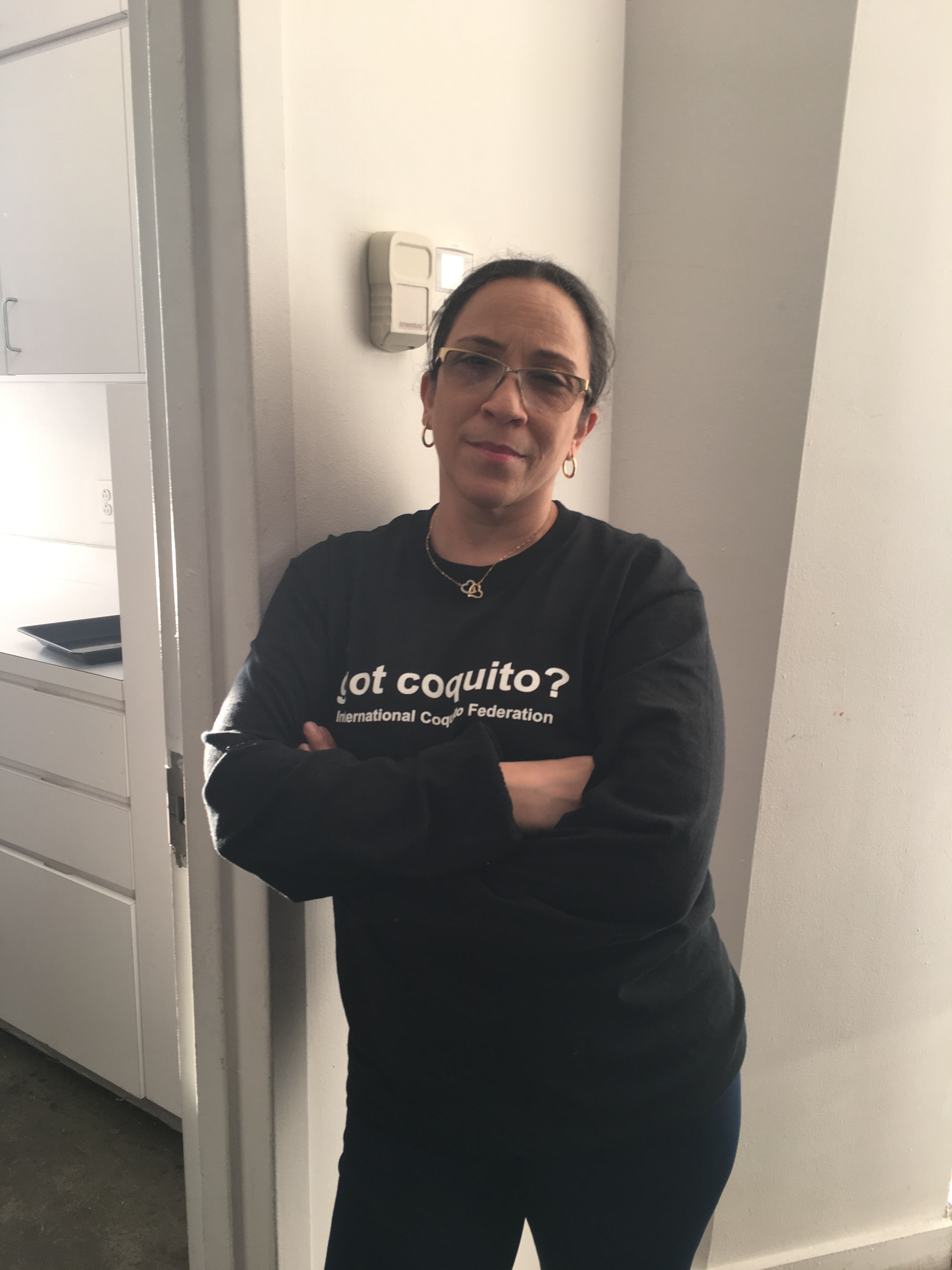
Debbie Quinones, founder of the International Coquito Tasting Federation, spoke passionately and excitedly about the special Puerto Rican drink.

“The ingredients really represent imperialism. All the ingredients do not grow in Puerto Rico indigenously,” stated Debbie The ingredients include rum, coconut milk, sweet condensed milk, egg yolk, nutmeg and cinnamon. Although these are the main ingredients, “Every family has their own special way of making it.”

Debbie explained how “There is always that one person in a family who passes down the recipe”. For Debbie, it was a family of friend of hers that taught her how to make coquito.

In 2001, Debbie started the Coquito Contest in her house so people could get access to coquito. “The contest represents an opportunity to celebrate pride.” Continue reading

Carolyn Stem, Age Friendly NYC

carolyn-stem_4744

By Carly Loy

Slightly uptown from the Metropolitan Museum of Art and the Solomon R. Guggenheim Museum is the New York Academy of Medicine. Here, Carolyn Stem works for a program called Age Friendly NYC. The Age Friendly NYC employees and volunteers collaborate with the mayor and his council to create initiatives to implement into the inner workings of New York City.

When former Mayor Michael Bloomberg first started the program, he asked all city departments to evaluate how “age friendly” they were. From that data, he created 59 initiatives to help make New York CIty more suitable to our aging community. Age Friendly NYC interviews specific seniors, runs polls, and more to assist in the process of creating a senior-friendly environment in the city that many  call home.

Carolyn Stem is not your average worker. She was actually retired before joining Age Friendly NYC. She came from a proactive family: Her father and uncle both worked in steel and her brother was a journalist — and all were involved in unions.

However, she wanted to follow her passion of opera singing which led the 18-year-old Carolyn Stem to New York City under an Opera and Voice program at Mannes College. This talent of hers even lead her to spend three years in Vienna under a fellowship. However, there is not a very large market for opera singers in the United States. When she returned to New York City, she continued looking for Continue reading

Alastair Onglingswan, Social Entrepreneur

By Lizbeth Brosnan

Green Soul Shoes is a waste reducing shoe company, aimed at providing shoes for one million underprivileged, shoeless children with their “buy one, give one” policy.

Shoes at Green Soul Shoes are made 100% from recycled rubber from tires. The company also provides local artisans with a source of income and a market in which they can sell their products. This impressive company is managed by Alastair Onglingswan.

Onglingswan shared his story of the idea behind this company during a recent visit to Fordham University in the Bronx.. After many career changes, Alastair was in search for a career in which he felt would lead to a meaningful life. His previous career as an attorney was not satisfying for him. Although Alastair was “successful” in the eyes of society, he did not feel like his work was fulfilling his passion.

Alastair spoke about a visit to a place nicknamed “Smoky Mountain”  in Manila, Philippines. This “mountain” was a shantytown built on top of a large garbage dump. The town was inhabited buy a number of people. The most striking was the number of shoeless children running through the garbage and mud, kicking a soccer ball.

After witnessing a child cut his foot on a dirty, sharp object, Alastair drove to a local store to purchase a pair of shoes for this shoeless child. He noticed during his visit that there was an opportunity for local shoemakers to make and sell shoes made from the piles of rubber on Smoky Mountain. Alastair shared “The opportunity to clean up the world, shoe shoeless children, and connect two stakeholders in the same community was one I could not resist”. Continue reading

Evelyn Jones Rich, Educator, Activist

unknown

By Jenna Lofaro

A lifetime activist and educator, Evelyn Jones Rich refers to herself as a “troublemaker.” From the time she was a young girl growing up in a poor neighborhood of Philadelphia she was pushing the boundaries of society. This can be seen in an anecdote she tells about her first job as a papergirl.

She says that her brothers were all paperboys and she decided that she was going to go out, distribute papers, and earn money for herself too. However, her gender created opposition with her employer stating, “there’s no such thing as a paper girl, whose has ever heard of such a thing?” Despite this, the young Evelyn convinced him to hire her and she kept her paper route for a couple of years.

Instances like this have been reoccurring throughout Evelyn’s life. In more current times, she has been working as a social justice activist for civil rights, effective education, and senior citizens.

One of the foundations she has worked with, the Shelley and Donald Rubin Foundation, works to provide collaborations between art and social justice projects. They also work to make grants available to needy areas and communities of the city. Her current project is a virtual museum that exposes the culture and history of the laboring people through visual works of art.

Asked why both of her foundations have to do with visual art, Continue reading

Yehya Balewa. Fordham Security Guard

By Jenna Lofaro

Sitting in the entrance to one of Fordham’s upperclassman residence halls is Yehya Balewa. an immigrant from Ghana. His job is to ensure and care for the safety of all residents living in his building between the hours of 10 p.m. to 6 a.m.

Yehya came to the United States 11 years ago. The Bronx is the first place he came to in the United States and he has never left. Yehya is a husband and father of 3 children. His wife left Ghana a year before him, and he soon followed with his children a year later.

When asked what the transition into American life was like, Yehya said he believes how one handles such a drastic change depends on the individual. For him, he found the transition was made easier by trying to maintain the same life style he formerly had. His focus remains on family and providing for them just as it did over a decade ago in Ghana. He says, “my children are my friends and that is all I need.”

Before Fordham, Yehya worked security at a different organization in the Bronx for five years. Now in his sixth year at Fordham, he enjoys the community of working in a university, especially when he gets the chance to work security at sporting events and witness the unity of the student body first hand.


Aaries, Restaurant Worker

aariesfordham

By Katie Russo

The Cosi chain of restaurants is known for quick, hot food in the line of soups, sandwiches and coffee. Like many restaurants, they have small eateries on college campuses, and Fordham University’s Cosi is a favorite of students looking for non-traditional campus food. The friendly but busy cashiers at the front entrance make quick work of an always-growing line, and Aaries is no exception. When observed from a table in the establishment, she made brief connections with the students, recognizing and interacting with some, as well as talking and laughing with her coworkers. She was just as friendly and helpful when approached to be interviewed, and enthusiastically answered all questions.

Aaries was born at the very beginning of March in 1994, in Harlem. She has lived there her whole life, currently at 155th Street and 8th Avenue. The Polo Grounds and Sugar Hill are still a favorite neighborhood, and she remembers a childhood there fondly, with a close-knit community of neighbors. She attended public school at PS 9 (also known as the Sarah Anderson School, located on 84th Street), then attended High School for the Humanities (Bayard Rustin Education Complex) in Chelsea, on West 18th Street between Eighth and Ninth Avenues. After graduating high school, Aaries completed a year of college at the New York Film Academy, studying producing.

Her first job was a retail sales associate at Banana Republic, with the follow-up observation that “they don’t pay enough.” The $9.00 an hour in retail makes her appreciate the higher $12.00 wage at Cosi, which helps her Continue reading

Jose, Fordham Facilities Worker


josefordham

By Katie Russo

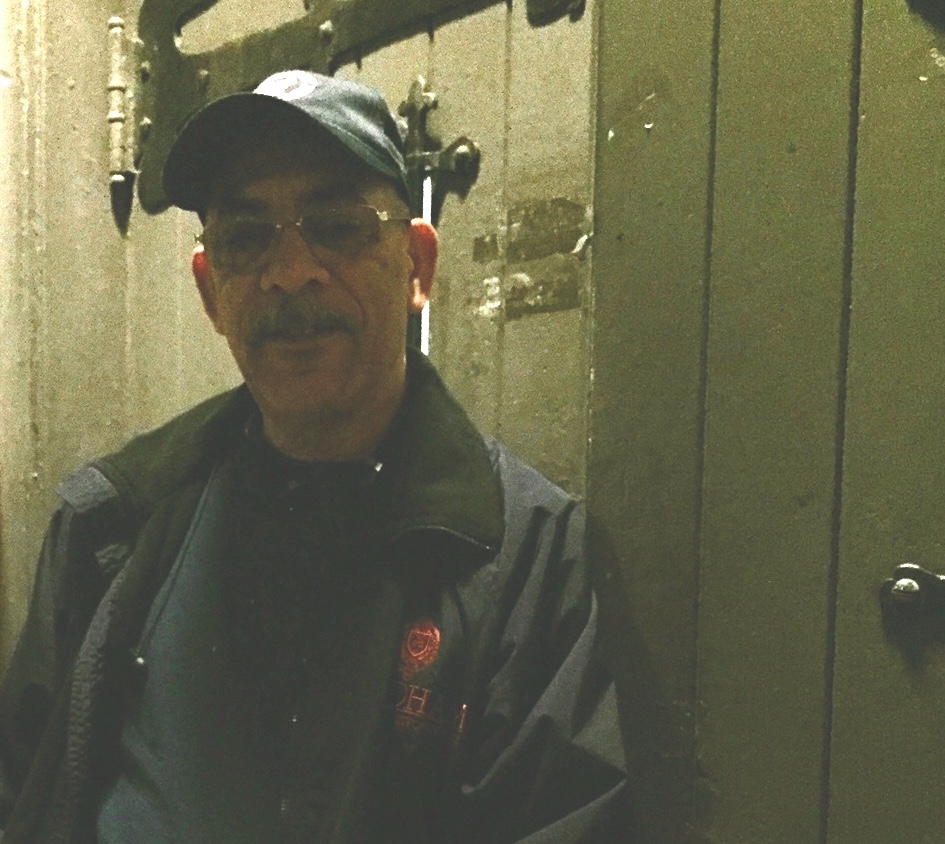
The ubiquitous white vehicles with maroon details and blue uniforms with red embroidery sometimes fade into the background for Fordham students, who become accustomed to the presence of maintenance workers with far longer tenures than them. In the shadowy doorway of Larkin Hall at night, Jose is hidden from most angles except for the glow of his cigarette and the glint of light on his glasses.

Jose was born in Santiago, Dominican Republic, in 1954. He grew up there, and met his wife in school. They were engaged and married shortly after completing their educations. They had three children, whom Jose describes as joys of his life. When in the Dominican Republic, Jose was a tailor. He enjoyed the craftsmanship involved with the job, but said that the most important thing was that it put food on the table.

In 1984, Jose and his family moved from the Dominican Republic to the United States. They first settled in Spanish Harlem, but later moved up to the Bronx. When asked what his first job in New York City was, Jose said he could not even remember with a laugh. He said he had many jobs, the most memorable being a factory in Brooklyn when there was still manufacturing, and a taxi driver. Around age 40, Jose began to work at Fordham in maintenance.

Jose cleans the lab building for the biological sciences, Continue reading

Judy West, Jazz Singer and Union Official

judywest-tn

By Lisbeth Brosnan

Judy West, 94, who has pursued issues of inequality for decades from her Upper West Side Manhattan home, describes herself as an optimistic jazz singer, avid reader — and political activist who is very sensitive to social injustices.

She said in an interview that her parents had been very progressive and raised her to be an independent, assertive woman. Judy has lived in New York all of her life. Although her husband died at the age of 42, Judy speaks proudly of her family. She has raised two sons, with grandchildren and one grandchild.

Judy’s very interesting and rewarding life prompted a decision to give her the Clara Lemlich Award in 2013. The Clara Lemlich Award, named for one of the leaders of the union organizing response to the death of 147 workers at the Triangle Shirtwaist Factory fire in lower Manhattan in 1911, recognizes women in their 80s, 90s and 100s who have worked for the greater good for their entire lives. That defines Judy West.

Judy worked in many different positions throughout her life, including working in public relations for the musician’s union, working as a CEO at Neighborhood Development Corp. in the Bronx, partnering with the Black Panthers to open a bookstore called “Seize the Time,” and working as the Labor Coordinator for Tenants and Neighbors. Judy had wanted social activism to be a central part of her career. She explained she would have stayed working in the Musician’s Union forever if she had not grown old. She loved her job at the union and described both the work they did and her staff as extraordinary.

As a jazz singer herself, Judy West has always been fond of music. She cannot pinpoint a favorite musician, but describes all musicians as the best type of people. Her husband had also been a musician, a violinist.

One of her sons is also considered the most important fiddle teacher in the world. She considers musicians to be the nicest and smartest of all people, describing their relationship with the audience as organic. She stated that musicians are “more emotional than males are allowed to be.” Even her great granddaughter, aged 11, can sing many songs from the musical “Hamilton.”

Judy West has lived a long and exciting life, always working for the greater good of society. Her work lead to many great changes and both her passion and excitement about all of her accomplishments is clear to all who are able to speak with her.

James Manning, Labor Lawyer

fullsizerender

By Carly Loy

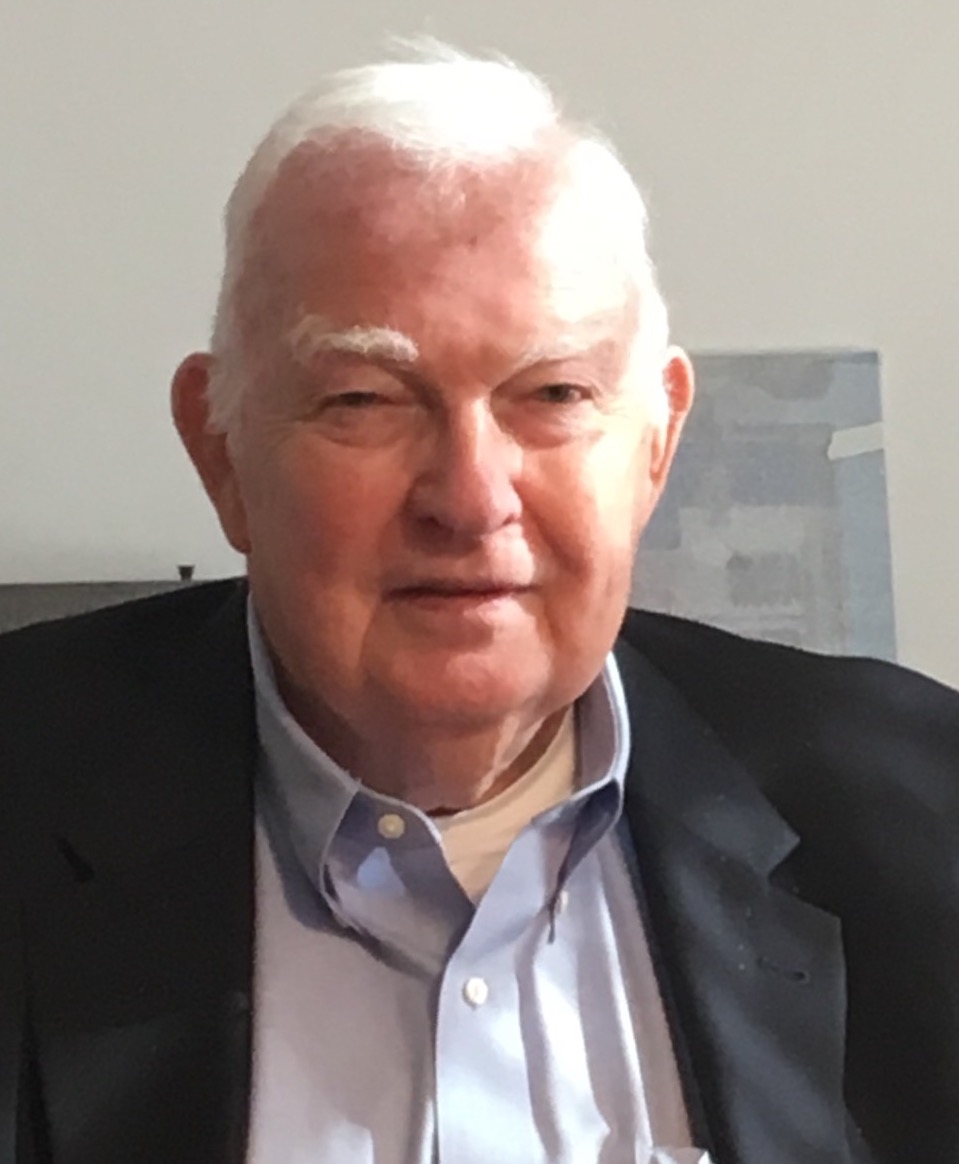
As James Manning, aged 86, sat in his chair in the Bronx Documentary Center on Courtlandt Avenue in the South Bronx, he was surrounded by “what was.”

As a child, he had lived not too far away from this non-profit gallery. When his parents immigrated from Ireland in the early 1900s, the neighborhood was a collection of people whose homes were across the ocean. His mother immigrated when she was 14 years old. As a new resident of New York City and the United States in general, her first task was to find her way to Brooklyn to see her uncle who was to assist her in finding a job. His father was in the army. His parents met on Governors Island and later resided in the South Bronx. Manning spoke of his neighborhood being on the poorer side, but everyone just thought that’s the way it was. Since everyone was in the same situation, they did not view themselves as lesser. Everyone was poor so no one was poor.

With a background of education at Manhattan college, Fordham Law, and 14 years in the National Guard, Manning became a lawyer. He first represented management, but in 1971 found that his passion lay with representing unions.

Through the eyes of a labor lawyer, he experienced the rise and cresting of the American union movement. In the height of unions, Continue reading