 Joanna Herman is a retired professor and education activist who has worked and volunteered in a variety of Civil Rights campaigns.
Interviewed by Erin McNally
I was born in Waterbury Connecticut in the late 1940s to a working-class Italian family. Hard-working and loving parents as they were, my family was the sign of times, racist and close minded. It was not until high school until I got a close glimpse of just how racist my community was.
My sister started working at a summer camp in the ghetto. I listened to her stories of the fun at the camp and all of the activities there. There was one story that changed the course of my life forever: There was a group of African American girls that participated in a dance competition. She told me of their ability and rhythm that was unmatched by the other groups. Solemnly, my sister ended the story that she knew that the group would never win, because of the color of their skin. As it brought tears to my eyes, I knew that I had to do something about this in my life. I made the decision then and there that I had to do something more.
Fast forward years later, and at Boston University, a solution presented itself. It took the form of the Civil Rights Movement. It was the 1960s in one of the most urban places in the country. Being at BU during this time, the Civil Rights Movement was a piece of theater in our hands, having us be part of history because that’s just what you did. There was something in the air then and Boston brought me into the larger world. While attending university, I served as an au pair for a local family. The father was a minister at the local colleges, such as Harvard and MIT. He was also a huge Civil Rights activist and the family home served as a meeting place for activist leaders. They taught me what it meant to be American and how to make it out in the world. College served as the catalyst into my political activism and married both my work and activism into a single outlet.
I came to New York after college to pursue a career in teaching, with my own activist ambition in the back of my mind. I started at a Day Care center in the Bronx and library in Harlem, where I found a connection between activism and my work. After some time there, I started a job at a private elementary school in Manhattan where I furthered my ambition by taking classes out of the classroom, pursuing a policy of finding connections between coursework and real-life education.
I then started working at City College, which I called my home for over 40 years. There, I taught basic writing courses when a lot of my students were under-educated and from under-resourced communities. At City College, there was a large international population, where students had come from Pakistan, parts of Africa and so many other disenfranchised countries. These students were also most likely undocumented and marginal in American society. I found it my duty to service these kids as they had gone to such great lengths to not only come to America, but to further their education and become active members of society. One of the students literally stored himself in a checked suitcase, traveling from a country in Africa to come to the States. For these students, they came from more

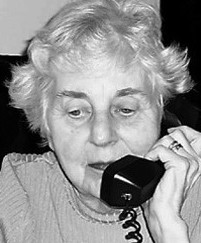

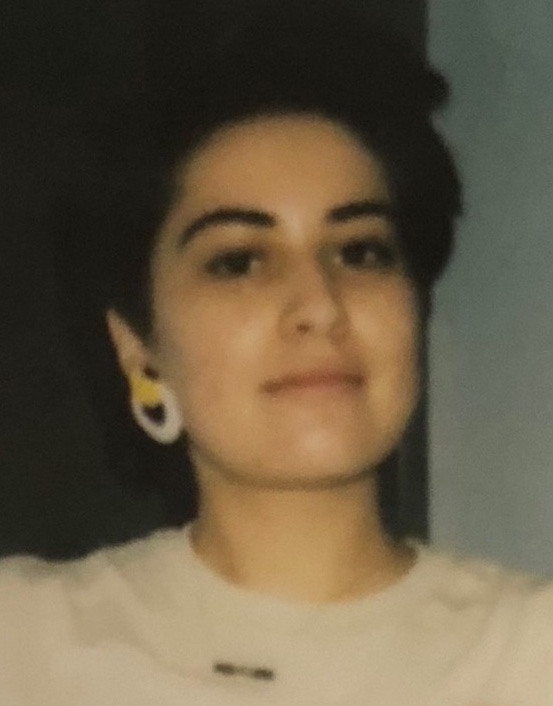

 Joan Levine was the chair of the Morningside Heights Community Relations Committee in 1994 when she partnered with Sara Martin, president of the Grant Resident Association at Grant Houses across the road. Together, they would form the Morningside Heights and West Harlem Sanitation Coalition and collaborate to develop a recycling education program for both apartment complexes to address rising garbage and inadequate trash collection. Joan had worked as an elementary school teacher and as an adjunct associate professor in the School of Education at City College for 13 years. She was a 2014 Clara Lemlich co-honoree in 2014 with Sarah Martin, pictured above, left.
 Sarah Martin lived in Grant Houses, a public housing project in Morningside Heights for 57 years until 2014. Grant Houses served as the original site of Martin’s environmentalist and sanitation work. Martin formed the Morningside Heights and West Harlem Sanitation Coalition with Joan Levine in 1994 when she was president of the Grant Houses Resident Association to address the effects of poor trash management in the neighborhood. Martin and Levin developed a hands-on recycling education program that has since been adopted by city agencies like Grow NYC, and have influenced city officials to expand the approach. She was a 2014 Clara Lemlich co-honoree with Joan Levine, at right, above..
  Gloria Sukenick is an accomplished social activist for both the women’s movement and the housing movement. Living in New York City, Gloria has used her opportunities to voice her opinions on important issues and has allowed others to do the same. Still residing in New York City, she continues to attend social movements such as fundraisers for electing people to office who hold the housing movement as a central issue. She was a Clara Lemlich awards honoree in 2015.
 WorkersWrite