Why Do I Wait Tables (at Red Lobster)?

By Richard Johnson

Someone once asked me, “Why do I wait tables?” She suggested that since I have multiple degrees (I have a graduate degree as well as my undergrad) and I only make $40-$60 a night I should do something else.

First, I don’t only make $40-$60 a night. If I did, I would’ve gotten out of this business a LONG time ago. I have co-workers who make that a night because they suck and don’t care, but rare is the shift that I make under $80, and most nights are beyond that. Honestly, I am disappointed in less than $100 per shift (but yes it happens). It’s not worth my time (especially in winter) to drive into work for less than that. I have a fairly long commute by city standards to get to my restaurant. There are other Red Lobster stores (and other Darden owned restaurants) closer to where I live, but I work at my present store because I can make more money there than at most of the other regional stores. I’ve worked in enough Red Lobsters to know a good one when I find it. Good being a relative term of course.

Hypothetically, let’s say I work 5 shifts a week for 30 hours. In those shifts if I average $125 per shift, that is $625 a week that I am taking home (with health care and the pittance that we get as tipped employees, we never see our hourly wages). Figure I work at least 49 weeks a year and that is over $30,000. And honestly, there are people in my store who make more than that, all for a “part time” job. Plus I get paid vacation. Plus we get stock options. And dental/health care is available.

Continue reading

Mission To Haiti

By Eugene Salomon, Taxi Driver, New York City
One of the little side-benefits of driving a cab in New York City is that you occasionally have a window presented to you through which to gain an insight into major world events. For example, to go way, way back, I once had a military man in full uniform get in my cab who was en route to New York’s Sloan-Kettering Hospital. It turned out he was a general in the army of the overthrown Iranian government who was going to visit “His Excellency” in the hospital. “His Excellency” was the Shah of Iran who had been overthrown by the Islamic revolution and was at that time receiving treatment for cancer at the hospital (from which he died shortly thereafter). I didn’t have a conversation of any substance with this military man, but his seriousness, his stiffness, his continuing to wear the uniform of an army that no longer existed as a show of respect for the deposed Shah, and his use of the term “His Excellency” have remained with me all these years. An abstraction had been given some mass, a face. Whenever the Iranian situation was mentioned after that I could think back on this ride and get a feeling for the way it was, just based on the way this general in my cab carried himself.

I had a ride like that a few days ago.

I picked up a young man in Manhattan who was headed for Kennedy Airport, and from there he would be flying home to London. New York was a stopover in his journey from his original point of departure – Haiti, a place that, of course, is very much in the news these days. He told me he is a photographer and had donated his services to record some of the relief effort that is in progress on the devastated island.

Continue reading

Cakes, Lost Cars & Cooking Your Own Meal

By Richard Cudlip, Taxi Driver, London

Or, in a slightly less obscure way, my top ten favourite cabbie moments from the last 3 years…..

back-of-the-cab10 – Cab as changing room. Nice young lady hails me on Piccadilly and needs to get to Covent Garden pronto.  Dressed in nice smart business suit carrying briefcase and holdall.  I concentrate on getting her there when all of a sudden I can’t see her in the rear view mirror.  What the?  I then notice that she is lying on the floor of the cab trying to fit herself into some pretty tight jeans.  Concentrate on the road cabbie, concentrate. 2 minutes later we reach her destination, she gives me a decent tip looking very glam and, I’ve just noticed, wearing a completely different top.  When did she do that?  Gutted, a nice old couple hail me and I take them to Victoria.  Did that just happen?

9 – Brighton & back. The most recent of the top 10, this happened on Monday this week.  About 11:30pm, I’d just done one of the most pointless jobs (Grosvenor House Hotel to Cumberland Hotel) of recent times, when I was round the back of Shepards Market thinking about going home.  3 blokes hail me.  “How much to Brighton & back mate?”.  Long pause from me, then short conversation along the lines of  “you mean the town” and “I’ve no idea what to charge” and “it’ll have to be money up front” and “I’ll need some more diesel” and “thanks, £??? will do nicely” (you never know when the Revenue might be listening).  And off we go.  It’s only one of them that needs to go, he is Dutch (I think) and needs to drop some money & documents at his “cousins” then get back to the Hilton Tower Bridge before heading home early Tuesday morning.  We chat, a bit, and 4 hours later I am home considerably better off than I had been at 11pm.  Nice.

Continue reading

Why Your Cab Driver is So Cranky

By Y.C., Taxi Driver, New York City

taxi-medallion-nyc-768x422

There’s a good reason your cab driver is so cranky: His livelihood might be teetering on the edge of default. According to a recent presentation prepared for Capital One Financial Corp. investors, some 81 percent of its $690 million in loans for taxi medallions are at risk of default.

Medallions, the small metal shields affixed to the hoods of taxi cabs, are issued by the local taxi authority and effectively allow the cabs to operate legally. Owning one used to be akin to owning a gas-guzzling, money-printing machine. Medallions in New York City traded at more than $1 million in 2014, but today’s prices are about half of that.

Now the share of taxi medallion loans Capital One thinks its borrowers won’t be able to repay in full has nearly tripled over the past year, to 51.5 percent. (Another 29 percent of loans are to stressed borrowers who could be in trouble soon.)

Continue reading

A Story with Legs

By Kelly Dessaint, Taxi Driver, San Francisco

public-works-cab-stand-taxi

One of the last things she said to me before walking out the door was, “I’m so sick and tired of hearing you talk about taxis and Uber! Uber this! Taxi that! Blah blah blah.”

Now I’m not about to blame, much less give credit to, San Francisco’s transportation problems for ruining my marriage—I’ve done a good job of that myself—but it didn’t help.

At first Irina enjoyed hearing my crazy stories when I got home late. She usually waited up for me and, while she drifted off to sleep, I’d regale her with the details of my rides. But eventually, she got bored. Because, as she pointed out, they were all the same story with only slight variations.

Continue reading

A Biblical Pestilence?

By Joe Blondo, Taxi Driver, Seattle

What Have We Wrought?

Can it be true,
or can it be not,
what we have brought
upon ourselves?
Could it be a divine
old Testament
pestilence
reminding us sins are
counted
and the numbers are in,
God
smiting us like
so many wayward
Egyptians
in a blood-red
sea?
Again
having done what,
what have we
done
to be punished so?

While of course an exaggeration, it does at times seem that we in taxi industry are cursed or under attack from less than benign spirits, given the numbers of obstacles placed in from of us, obstructing from making a simple dollar.  Last week four Yellow cabbies were given citations from the City of Seattle for the crime of not having their for-hire licenses copied, enlarged, then posted in the cab.

That the 10,000 plus Seattle Uber and Lyft drivers, under the same requirement having a current and valid for-hire license are neither stopped nor cited for similar violations says much about what is occurring.  The question is both why are we treated differently and just why does the City of Seattle and King County think we in the taxi industry will continue to accept the unacceptable?  Puzzling it is but certainly not indecipherable.

Continue reading

‘Onest Guv’nor: In Defense of the London Taxi Driver

By Sean Farrell, Taxi Driver, London

“Foul-mouthed, rude, obnoxious, bigoted, argumentative, extreme right-wing, money grabbing thieves . . .” and that’s just the good guys – upset a London taxi driver at your peril you and will become a fully paid up member of the endangered species list.

But are we really like this? No, of course we are not, “we’re all angels, ‘onest guv’nor”.

Don’t take my word for it, take the late Bob Payton, founder of the Chicago Rib Shack; he called us and the police “the only true professionals in Britain”. Whilst we accept his praise, it’s a bit much lumping us with the British bobby, after all, some of them carry guns, and we have to resort to other methods to deal with cyclists (or moving targets as I prefer to think of them).

Are we really the demonic force we are made out to be or are we the victims of a bad press after a newspaper reporter fails to get a cab home?

Continue reading

Emanuela Caferri, Another Life Change


caferri

By Emanuela Caferri

I was born in Ethiopia, and when I was eleven years old we moved to Italy. I lived in Italy for twenty-six years where I studied, worked, loved and grew up. It was a very interesting adventure.

Six years ago, I  moved here to the United States where I started a new adventure in New York City.

One of the best things that has happened in my life, was that I started practicing Buddhism. I was 13 years old the first time I heard about Buddhism, and even though I had met many Buddhists, I never practiced.

But then, I saw a documentary about Mahatma Gandhi.  I was impressed to see this little man who was so positive, determined and powerful. I started to watch more documentaries about him, and I saw where all of this came from.

He was doing meditation and yoga.

I liked that kind of philosophy, and I decided to do some research. Then someone spoke to me about Buddhism. Two years ago, I started to practice, and I got a lot of benefit from it.

But Buddhism is not magic.

One of the big concepts in Buddhism is that it can help you transform your negative mind to a positive mind. It helps you to see your life with clarity and shows you the power that you have inside you to transform your own life. The Buddhist philosophy is based on the fact that happiness is inside of you, so you do not have to depend on external things like people or situations.

Meditation is at the base of the Buddhist way of life. It helps us to connect to the universe.

This meditation is not in silence- it has sound. We repeat the words- NAM MYOHO RENGE KYO.

These words that we use during meditation can be repeated as often as we want.

Buddhism has helped me so much.

One of the nice things that happened to me in two years of practice, is that I now have my own apartment when, before,  it had seemed impossible

##

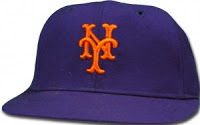
Pediatric Trauma: Pedro and His Mets Baseball Cap

mets

By Jo Cerrudo, ER Nurse

August 1997…

“This is EMS. You’re getting a 9-year old boy in traumatic arrest after a direct blow to the chest with a baseball. He’s intubated; we’ll be there in 2 minutes. ” My hands shook when I replaced the EMS notification phone.

After years of dealing with gunshot wounds and stab wounds in our Level 1 Trauma Center, I was not easily fazed, but taking care of pediatric patients scared me. I worked at the Adult Emergency Room but hospital policy dictated that pediatric traumas come to the Adult side for the initial rescue interventions. Many of the ED staff have young children at home, and cases involving kids always evoked strong responses among the parents in our group. I could almost imagine some of the parents in my staff calling on the phone for their family.

The baseball stunned our patient’s heart, and it was being squeezed to life by the frantic efforts of the paramedics who initiated cardiopulmonary resuscitation at the field. Commotio cordis describes a sudden cardiac arrest from a blow to the chest. The baseball had caused a disruption on the heart rhythm at a critical point during the cycle of a heartbeat resulting in ventricular fibrillation. The quivering heart did not produce a heartbeat. There’s a 65% mortality rate. A nightmare coming to our doorsteps.

Continue reading

The Effects of Nursing on Nurses

By Grimalkin, RN

This morning, while I was giving report to the day shift nurse taking over my patients, she burst into tears.

She’s going to miss her children’s hockey play offs due to our strictly enforced every other weekend schedules. You work every other weekend, no more, no less, unless you are going to college (I work every weekend because I’m in college). She’s their hockey coach, and inevitably, each year, their last game falls on a day their mother has to work. I’ve come in early for her before.

So I offered to come in on my night off for an hour and a half so she could get to the game. I’m coming in that early because I know she won’t be done charting.

She turned me down until another day RN got involved. I reminded my coworker I only live a mile from the hospital, and it really wasn’t a big sacrifice for me. She finally agreed, and calmed down. We got permission from the charge nurse.

Nursing is one of the largest professions in the world. If you don’t know a nurse, I’m really surprised. Nurses talk a lot about the rewards of nursing. Catching that vital sign, saving lives, providing comfort, but nurses, by nature, are taught to martyr themselves on the altar of nursing.

When I was a new grad, I hated coming to work so much that I would wish I’d get hit by a car on my way to work just to get out of work. One night, while checking medication sheets, I confessed this to some experienced nurses and found out some of them still felt the same way.

Continue reading