A Work in Progress

By Alyson McHargue

I started my new job this past week at a home accessories store here in LA.

Now, for you to fully understand the weight of that statement, you need to understand I’ve been job searching for a good 6 months fulltime here in Los Angeles. Prior to that I did four internships within the film industry which I had hoped would turn into full time jobs. Guess what? They didn’t.

Maybe it’s my fault. Maybe I didn’t try hard enough. Maybe I was scared to sell my soul to the industry at such a young age. OR maybe the film industry just loves to hire interns and ONLY interns. Who doesn’t love free labor?

Whatever the reason, I decided to stay in Los Angeles after my year long program was done to try and “make it”- whatever that means.
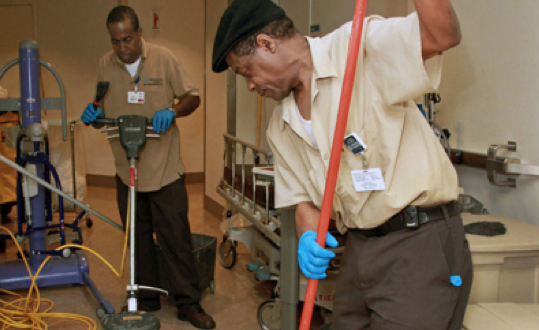
Continue reading

Taxi Drivers Like Me Start Every Week Hundreds of Dollars in Debt

By Gurminder Kahlon, Taxi Driver, Seattle
My name is Gurminder Kahlon; I am from India. In India I was a lawyer. Here I am a taxi driver.
Because of taxi drivers like me, people traveling for business, medical reasons, and to visit family and friends get to Sea-Tac (Seattle) Airport conveniently and on time for their flights.

The Port of Seattle and the big corporate airlines like Alaska depend on ground transportation services like taxi and shuttle drivers. And yet, we struggle to make a living. Just to have the privilege of picking up customers at our airport, we pay fees to Yellow Cab and to the Port of Seattle. Before I start work on Monday morning, I am already hundreds of dollars in debt. I have to work 12 hours a day and 6 days a week just to make ends meet.

It’s not right. That’s why I’m standing together with all workers for fair pay and respect.

Reprinted with permission from It’s Our Airport.

In Syracuse, NY, Examining the Poor Health of Low-Wage Workers

By Jeanette Zoeckler

Because people spend so much of their time at work, it is important to become aware of the ways that work impacts health. Low-wage jobs have become essential to our economy. Low paying, unstable work arrangements have created large numbers of workers with high risks of poor health due to hazardous health and safety conditions, the lack of a living wage, the potential for wage theft, the lack of union representation and discrimination.

There have always been dangerous and stressful work conditions, but historically, workers in difficult settings were frequently paid higher wages and benefits to compensate for the danger. Under these conditions workers in low wage jobs find it increasingly difficult to make a “decent living” under healthy conditions. Because these striking national trends are also likely locally here in Syracuse, NY, the Low-Wage Workers’ Health Project sought to characterize local low-wage workplace conditions and some of their potential impacts on worker health with an aim toward developing ideas and strategies for improving working conditions. The Project is a collaboration based at the Occupational Health Clinical Center in Syracuse.

More than 569 low-wage workers in Syracuse have described their working lives through surveys and focus groups conducted in the past three years.

Continue reading

I Really Like My Job, But…

By Lonnie Glander

I’ve worked as a full time server in Portland, Maine, since 2002.  Before that I was waiting tables during the summer while attending school. I really like my job and I take it very seriously. I worked as a server at one local restaurant for eight and half years, and while the tips were good, I never got a raise.

After working on my feet for so many years I had hernia surgery (from lifting and carrying heavy trays up and down stairs) and blew out my knees. Every time I get sick or injured, I am out a paycheck. We have no paid sick days, so even if I’m injured, I feel compelled to go to work or worry about how I’m going to make rent.

I’ve been at my current job for three years and got a promotion to supervisor about a year ago. Sometimes I am at work up to 18 hours, and have to be back at the restaurant after a 6 hour break. You work like crazy during the busy season, but then during the slow season you can go weeks without a paycheck at all.

Serving has been my career. But it has wreaked havoc on my back and knees, and I feel I have nothing to show for it. I have no retirement, no security. I have enjoyed my jobs, and I often made enough to get by, but now am wondering if it was all worth it.

The minimum base pay must increase. It would give tipped workers stability, it would allow us the opportunity to save and prepare for slow seasons, which can come at unexpected times.

Reprinted with permission from Mainers For Fair Wages.

Home Care Workers Deserve a Living Wage

By Adelaide Baramburiye Manirakiza, Home Health Aide

My whole working life I have been helping people. When I lived In Burundi I worked for customs and advocated for people with HIV to be strong and to fight against the disease, and helped them learn how to protect themselves and others. When my husband died in the military, I realized that widows and orphans lost everything; we had no shelter, no electricity, and no health insurance. So I organized other widows and orphans in the army to fight for our rights. I was considered a dangerous woman by the government, so my life was in danger and I had to come to U.S. in 2007.

I have been working as a home care worker in Maine for the last 7 years. I started at $8.50 an hour, and now make $10 an hour during the day, but the agency I work for reduces my pay to $7.50 an hour for 8 hours each night because I should be sleeping. My job is to help people, and they need strong, good people who are alert and ready to help them. I don’t feel comfortable sleeping.

I work 48 hours a week, in a job that is hard and stressful, but I still don’t make enough to pay all my bills. I have MaineCare (Medicaid) for my health insurance, AVESTA for affordable housing, and have used TANF to get through hard times because the money I make through my job is not enough to cover all of our basic expenses. All four of my daughters are now in college. Sometimes I have to borrow money or get help from friends to help my daughters. Raising the minimum wage to $12 an hour would mean I could earn more to support my daughters in college and make sure their education positions them to be qualified to get paid more in this country.

Reprinted with permission from Mainers For Fair Wages.

How About a Fair Wage for Retail Workers

By Brandy Staples
I’ve worked retail jobs at big box stores on and off for many years. At these kinds of jobs, you need to be trained in several areas so that you can be pulled from what you are doing and told to do something else at any point. Retail work does not pay you for your expertise and knowledge; you must know how to do everything in your store at one low wage.
Every morning, at any retail establishment that I’ve worked, you will have a morning meeting to go over any store issues, the day’s finances and any promotions coming up. In this meeting be prepared to have everything be your fault. It’s your fault that the numbers weren’t met the day or the week before. It’s your fault that the customer refused add-on purchases. It’s your fault when the store is short-staffed and a customer steals $10,000 worth of merchandise (because there was no staff coverage for that area of the store). More than once, I’ve seen “offenses” like these be used to cut workers’ hours or strip down their job titles.

My biggest pet peeve about working in any retail establishment is the fact that minimum wage workers are the ones that are keeping their company afloat, while the big CEOs sit around and collect profits. The minimum wage workers, who are keeping the company alive, are not valued for their hard work. They are treated as a dime a dozen, usually get little-to-no recognition, and rarely get any benefits. This needs to stop.

Continue reading

It’s Important, Exhausting Work. And It’s $10.35 an Hour

By Nicole Hodgkiss, Certified Nursing Assistant

I’ve been working as a CNA at a nursing home in Waterville, Maine for 6 years.  I live in Winthrop with my sister, who works as a hair stylist. At my job, I take care of elderly people and residents that live on a psych unit. It’s important, exhausting work – emotionally and physically taxing.  Yet, over 6 years I’ve received a total raise of a dollar. I now make $10.35 per hour.   The wage I make as a CNA doesn’t recognize the skill or commitment that I bring to my work, and it’s obvious that there’s really no opportunity for me to move up the wage scale.  It would be impossible for me to support myself on my own or even dream of raising a family on 10.35/hour.  I’d like to go on in my medical training but I’m not sure how on a low-wage that I would be able to afford it.  I know there are a lot of women in the same situation as me. For me and for my family, a minimum wage increase to $12 (or more) would be a shot at making ends meet.  It would mean that my work, and my mom’s work (she too is a CNA) was recognized and valued.

Reprinted with permission from Mainers For Fair Wages.

Nothing Good Comes After…

By H.P., Pharmacist

Words are wonderful. They are how we communicate. When put in a certain order, words can ask, answer, elate, hurt, calm, soothe, comfort, enrage, or simply terrorize. In today’s case, nothing scares us more than these phrases, alone or, in the scariest situations, in some unholy arrangement that will leave us sleepless for weeks. I believe that a little knowledge can be a good thing. However, a little information can be a bad thing.

“I have this rash…”
“Can you look at this for me?”
“Do you have any questions for the pharmacist…?” (We should ask, “germane to your prescription”.)
“I looked it up on WebMD and they said…”
“Can you identify this?” (asked while holding an apparently clear bag)
“I saw this on Dr. Oz…” or rather anything that starts with or includes “Dr. Oz…”
Same goes for anything that includes “…ObamaCare…”

“I think I might have this rash, and I saw this product on Dr. Oz, and I need you to look at it and identify it, and is it covered under Obamacare, because WebMD tells me it’s cancer.”

Reprinted with permission from The Cynical Pharmacist.  Also on Facebook.

Honorary Grandparents

By May, Certified Nursing Assistant

It’s always strange, coming back to work after extended time off. . .anything longer than a three day weekend. I always seem to think that I’ll lose some skills (or worse, speed) when I come back. I’m not sure where I acquired this idea, nor why I hold onto it.

On the one hand, nothing changes while you’re gone: there’s still too many residents and not enough aides. The work doesn’t change. On the other hand, a lot can change in almost a week. One resident can pass away, another could fall. Mr. J can change from being a standing lift to a hoyer. The residents with more advanced dementia can forget me entirely, others assume the worst from my absence.

Take Mrs. N for example. As soon as she opens her eyes and sees me standing by the foot of her bed, an expression of pure relief floods her face.

“May, you’re back! Did you decide not to abandon us after all?” she asks, grasping my hands as soon as I set her tray down at her beside table.

I’m still worn out from the week I’ve has, so I convey my confusion about her inquiry with an ineloquent but effective syllable: “Huh?”

“You left us,” she says reproachfully. “But I suppose I can forgive you as long as you don’t quit again and leave me.”

Continue reading

20 Years of Standing, Mostly 12 Hours a Day, 5 Days in a Row, Takes Its Toll

By H.P., Pharmacist

I don’t feel like my MIND is getting old, in fact, all the contrary.

I don’t think I LOOK as old as my parents did when they were in their early 40s… but I suppose that is relative.

My hips and lower back, on the other hand, well, let’s just say that being a pharmacist has taken it’s toll on my joints, primarily my hips which throb at night, and creak and pop along with my knees.

2015 was my 20th year, “on the bench!”

I blame the 12 hour days, 5 in a row, for the first 15 years of my career, standing put, on my feet for this current state.  Over the last 2 years, I have had a variety of workups, from Lyme (I was + and had the doxy), stopped a statin as an experiment, discovered L4 through S1 lower back stenosis evidenced in an MRI, XRay, bulging disc and 3 months of Physical Therapy, and epidural injection, all which didn’t help. That is an old issue.  The hip pain is new.

The hip (joint) doctor  sent me to a back doctor for those back injections. Then I went to a back doctor who said it is my hip, and she (the back doctor) did hip injections.  Sounds bass ackwards.  But, finally, I had some relief, not for long, maybe 2 weeks of relief.  In fact, the back doctor ordered more tests, and determined I have labral tears.

Answers.  That took a while.

Continue reading