Empty Cans

By ORLANDO ALVAREZ

It was the summer of 1990, and I was living in an apartment building in Jackson Heights, Queens. Everything looked good to me. I had started to meet new neighbors and make new friends because I had moved there not long before. I remember at that time there was an important event going on in Europe. It was the soccer World Cup, and everybody was following it.

One Saturday evening, the most important game finally arrived. It was Colombia vs. Germany. A lot of people were outside of my building watching the game because the super had put a TV in the window facing the street. People got very excited, and they made a lot of noise. They were celebrating, and of course, drinking beer.
Suddenly, I turned my eyes to the left, and I saw a woman sitting down next to me. She was holding a plastic bag in her right hand. I remember that she said, “Hello.” But I couldn’t answer because my communication in English was very limited at that time. She continued talking to me and asking so many questions: “What’s happening here? Why are a lot of people on the street?” Finally, she realized that it was a soccer game.

After a little while, I asked her if she drank beer. She started to laugh, “No, I don’t drink. I just pick up the empty cans:’ The game was getting interesting, and the people continued drinking. At the end of the
Continue reading

Childhood in a Factory in Macau

by YUK YEE (JAY) CHAN FUNG

My mother was a worker in a factory that made incense. All my siblings and I spent most of our childhood in the factory where our mother worked. We all started our time in the factory from the second day of our lives. We were not the only children in a family who had to start their lives there. Most of the women who worked there had to carry their new babies to work after the delivery. Life was very difficult during that period. Babies were either on their mother’s back or
on the dirty, cold ground while awake or sleeping. The environment was terrible.

The floor was full of powder and the wooden, skinny sticks that hurt people’s skin. Younger children were not allowed to go outside because nobody would look after them. The older children played outside, but most of them had dirty faces with snot running from their nostrils. Nobody had time to take care of the urchins.

I remember there were many rows of tables lined up in a dim and crowded area, similar to a garment factory with sewing machines. There were a few electric bulbs hanging on top of the ceiling, covered with lampshades. All the wooden windows were open in summer. My

Continue reading

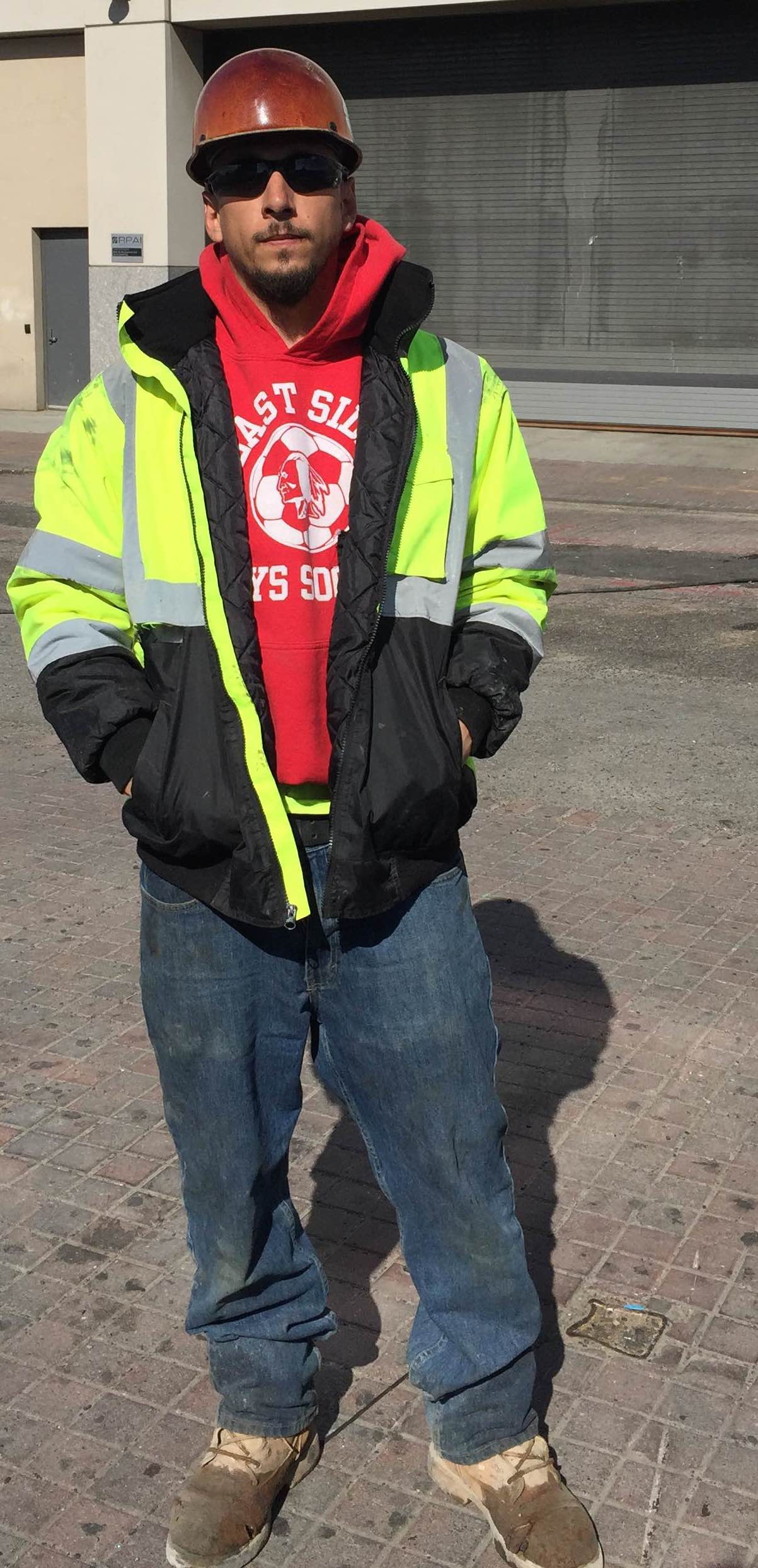
Ivo Duarte, Construction Worker

IMG_2902

by Matthew Kelly
Across from Metro North and Fordham University’s Walsh Library is Fordham Plaza, which has been under construction for the better part of the past half-year.  What was once a small pizza stand and abandoned lot is now being built into a marketplace for local businesses, as a part of City Hall’s plan to improve the community surrounding Fordham Road.

For the past six months a team of 15 to 30 construction workers have been in the process of building the new market, one of them being Ivo Duarte.

Duarte is one of the workers who have been at Fordham Plaza the past few months, as one of the various sites in the city he was worked at over the past few years. He came to the United States in 1998 from Portugal with his parents and younger brother at 13 years old, with his parents leaving their native country in search of a better life for their two sons.

The family settled into New Jersey where Ivo found the initial transition into American society to be difficult at first, but was soon comfortable with the English language while continuing to play soccer in the United States. He played soccer for a number of years while in Portugal and was awarded an athletic scholarship to attend private high school in New Jersey. After high school he briefly attended college before going into construction in the city.

Ivo joined the union 5 years ago and has worked at numerous sites across the city, including at the Far Rockaways, the United Nations building, World Trade Center Tower 1 and Station Hub, as well as in Central Park where he is still working. He finds his work in construction to be rewarding and today Ivo serves as a general laborer but plans on working for another 20 years or so to eventually become a foreman and site manager.

Outside of his work, Ivo is in the process of becoming an American citizen and has made a life for himself in New Jersey. The future holds promise for Duarte who seeks to continue his work in construction in the coming years. His parent’s sacrifice has given him opportunities which he may not have been afforded in Portugal, as he and his family have had the chance for a new life in the United States.

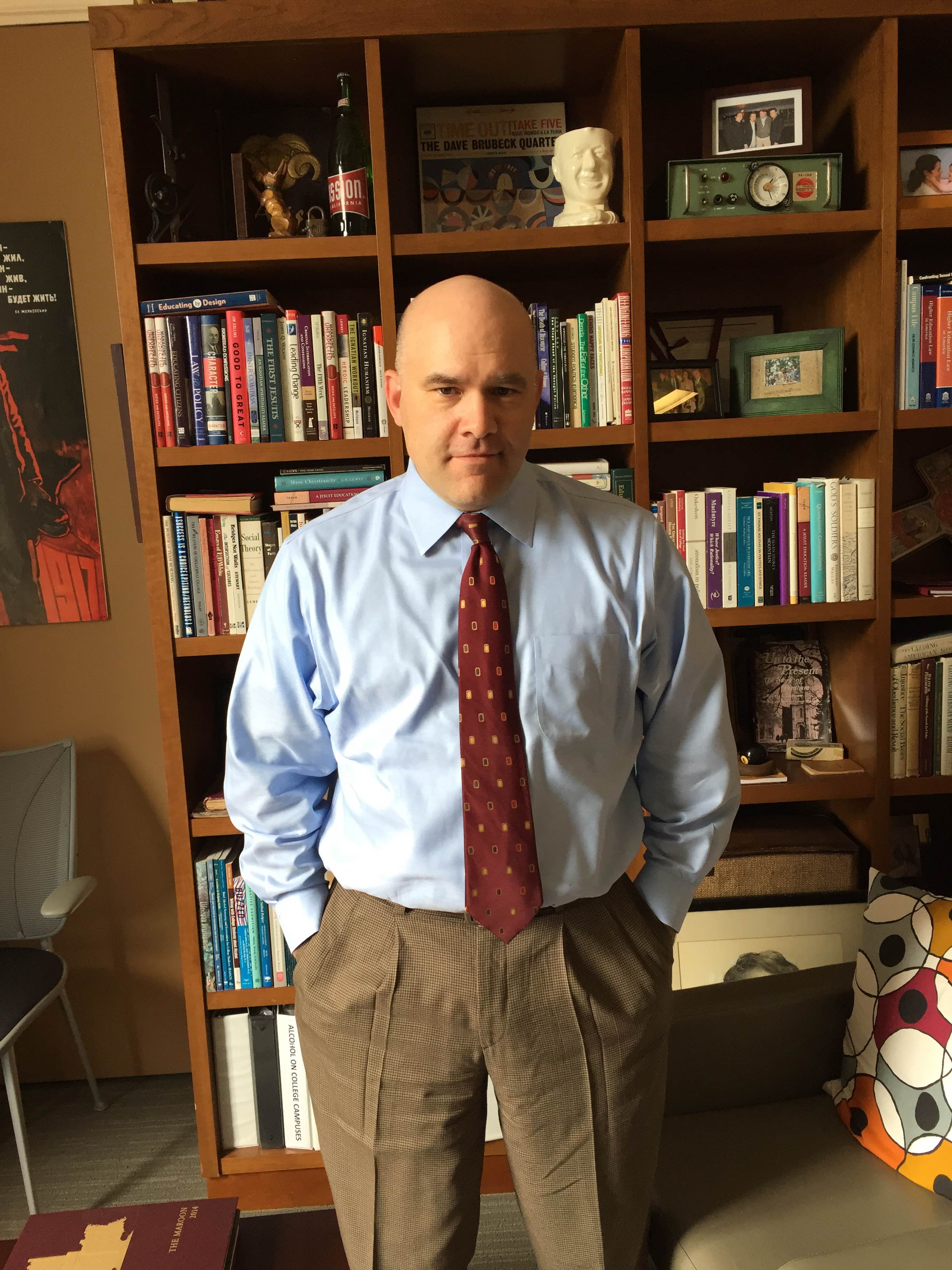
Dean Chris Rodgers


IMG_2686

By Matthew Kelly

Being the Dean of Student Affairs is no simple task to accomplish, but someone has to play the part. For the past decade Chris Rodgers has filled this role, overseeing the on- and off-campus life of Fordham’s 5,000 undergraduates at Rose Hill. Rodgers described his mission as caring for students outside of the classroom by creating a healthy campus community, and how does he do this?

The Jesuit tradition that teaches the importance of the community over the individual was instilled into Mr. Rodgers as a residence assistant at the Catholic University of America.

Here he found a calling to help others and soon moved away from the practice of law towards the field of education, arriving at Fordham with a desire to serve. After twenty years at the university, Rodgers settled into the position of Dean of Student Affairs, where his job plays a crucial part in a Fordham student’s on-campus experience. Continue reading

Nadia, Spray-Can Artist

By Lisa Calcasola

Nadia is one of the many street artists trying to make a living in Manhattan. I found her in Times Square on a Wednesday evening after the #FightFor15 protests. She laughs at my
attempts to pronounce her last name and says to stop trying.

“Please,” is all she can say.

Nadia is a short girl with cropped pink hair. She currently lives in Brooklyn and comes to Manhattan every day to set up shop on the sidewalk.

“I work eight to ten hours a day,” she says. “Sometimes more, sometimes less, depending on the weather. I get two months off when it’s really cold, in December and January, but the rest of the time I’m out here.”

Nadia has been interested in art ever since childhood. All of her artwork is done with spray cans. On display that night were lots of pictures featuring a brightly colored moon against a black sky and the city skyline. Space seemed to be a central theme for her artwork.

Nadia’s hot spot right now is Times Square, because of the thousands of tourists that go in and out every day, but she’s also been around the Central and Bryant Park areas.

“It’s hard to be stable,” she says. “One day you get lots of business, and the next day you get none. And right now I’m too far down the street. People come from that direction and pass by other artists before they get to me, and buy their paintings instead.”

When asked whether she decides the prices of her artwork, she laughs and says, “No, they are pre-determined, the same as everyone else’s. Paintings are $20, $30 with the frame.”

“This is my fourth time to New York,” she says. “People come here to make money.”

I ask her what she thought of the protests that happened on this day and she said that she understands where the people are coming from. “They work long hours and do not get paid a lot. I understand why they’re upset.”

Marching for Minimum Raise

April 15, 2015
by Lisa Calcasola

By the time the Fight for 15 protests stopped in Times Square in Manhattan on , it was dark. People who had been preparing for the event weeks ahead of time dropped their signs on the side of the road to be recycled and went their separate ways.

Even with most of the protestors gone, the space still felt electric with its energy.  I talked with Chantelle and Monica; Monica had a camera around her neck. I asked if she was interested in film, and she told me she was in film school now, studying to be a director. Film is one of the most accessible forms of media there is, and can reach a multifaceted audience, she said.

“I’m really interested in documentaries,” Monica said. “Film can shed light on lots of social issues and get the word out, teach people about what’s going on.”

When asked what she thought today’s biggest message was about, Chantelle feistily replied, “It’s all about not letting corporations steal from the people.”

“Corporations make billions of dollars and what’re they doing with it? They’re keeping it for themselves and stealing from the people. Today is all about making sure we don’t let them win. We won’t go down without a fight.” Continue reading

Fighting for 15 — Jesse Jones

By Lisa Calcasola

Among those rallying the Fight for 15, a raise in the minimum wage this week, was Jesse Jones. The goal: a $15 an hour minimum wage increase and the right for workers to unionize.

Mr. Jones just started working at Wendy’s fast food restaurant
just a week and a half ago, specifically in order to join Wednesday’s protests as a fast food worker.

“I don’t have much to say,” Mr. Jones began. “See that lady over there? She organized this whole event. You should talk to her.”

“We’ve been doing this thing for a few years now,” he began, referring to the Fight for 15 rallies.

“It just keeps getting bigger and bigger and we’re not gonna stop until we win. We can’t stop.”

When asked what he personally would do with the minimum wage raise, Mr. Jones laughed and

said, “Party.”

“But really,” he said. “People would do whatever they wanted to do. They’d have more leisure

time to get with friends, or get that iced coffee, or whatever. The point is they’d have more time

to live, instead of just working and sacrificing and feeling like none of it is paying off.”

“I’m thirty-eight years old now. It’s too late for me. But I fight for the younger generation, too, so that you and your kids won’t be in the same position we’ve been in. Students have a lot of problems, too, with increased student loan debt. They’re also forced to take minimum-wage jobs to get by.”
Continue reading

Fight for $15 Protest–Manhattan

April 15, 2015
By Lisa Calcasola

The last time that the federal minimum wage was raised, from $6.55 to $7.25 an hour, was in July of 2009, the last of a three-step increase approved by Congress in 2007. Before 2007, however, the rate had been stuck at $5.15/hour for 10 years.

This April 15, 2015 was an important day for thousands of people across the United States and even worldwide. The Fight for 15 movement, whose mission statement is to raise minimum wage to $15 an hour by the end of 2015 and allow workers the right to unionize, made a statement as thousands of people in over 200 hundred cities and 35 countries gathered to protest. The Fight for 15 movements began in New York City, when 200 people, mostly fast food workers, went on strike after Thanksgiving Day in 2012.

As living expenses continue going up, it has become more and more important to watch over every dollar entering one’s bank account. Working long hours, some of which go undocumented (and thus where the slogan “overworked and underpaid” comes from in this year’s Manhattan protest) for years and years while not seeing a difference being made despite one’s efforts and reliability is discouraging to workers across the country and globe. Worse, since prices on daily
necessities are increasing and wages are not, workers often sacrifice time with their family and loved ones to work even longer hours just to keep that bubble of financial security.

The Fight for 15 demonstrations in Manhattan began at 4 p.m. with a stirring rally to prepare for the 6 p.m. march from 59th street at Central Park to 42nd street in Times Square. Workers from homecare, childcare, hotels, fast food restaurants and other fields held signs such as “Fight for 15 and Raise America”, “Worker’s Need, not Corporation Greed”, and “Invisible No More.”

Ms. Joy Watts was one of the many women marching in the crowd, wearing a purple “I’m a Proud 1199 Homecare Worker” sticker on her white scrubs. Ms. Watts has worked with the same patient for eight years and has not seen a change in wages in 10. Continue reading

David Felicier, Maintenance Worker

By Lisa Calcasola

People don’t graduate from high school for a number of reasons, be it because of economic instability, social pressures, or other influences. Adults who do not have a high school diploma or equivalency feel it is increasingly harder if not impossible in today’s world to find a job and/or maintain job security without proof of their high school education.

There is a program in lower Manhattan that offers hope to people wishing to complete their high school education, which has become almost required for  economic survival. Unfortunately, many of today’s high school equivalency classes have been bought and privatized by businesses, and are no longer free. The Consortium for Worker’s Education on West 17th has kept the program free of charge to participants, as well as ensuring that participants do not need a Social Security number to take classes, thanks to lobbying work by union workers.

Mr. David Felicier is one of twenty or so members who gather every Saturday in school to take the classes. Mr. Felicier and his wife, Patricia Escobar, are so committed to getting their education that they commute every Saturday from the Poconos mountains of Pennsylvania to New York City, a journey of over 100 miles.

“’I’m a maintenance worker,” says Mr. Felicier. “I fix broken stuff.” He works for the New York City Housing Authority at various public housing sites. Continue reading

Patricia Escobar, Nanny

by Lisa Calcasola

Patricia Escobar is a small woman with a golden heart. Ms. Escobar, like Mr. David Felicier and other adults gathering every Saturday to achieve their high school equivalency degree in lower Manhattan, notes the heavy emphasis on a diploma in today’s society. However unlike her husband, her reasons for getting her high school equivalency are a little different from simply moving up in the workaday world.

“It is such a blessing for me to be here,” says Ms. Escobar, smiling wide. “Especially for free! I am grateful every day for this opportunity and for these amazing teachers who never give up on us. That means so much.”

Ms. Escobar grew up in Mexico in poverty. She came to the United States at 21 years old to work as a nanny. Ever since she’s been a child herself, Ms. Escobar has been in love with helping children play and grow. Continue reading